Calphalon Classic 10-Piece Stainless Steel Set: Induction-Ready, But Verify Before You Buy
2026-08-27 by Ingrid Falk
The cardboard shipping carton lands on your kitchen counter on a gray Tuesday morning, and the tape makes a low rip as you pull it free. Inside, the pans are nested like Russian dolls—ten pieces of stainless steel, heavy enough that you brace the box with your other hand. You've just moved into an apartment with a glass-ceramic induction cooktop, and the product photos on the box show the same burners, the same blue glow. But a forum thread from last night keeps nudging your memory: some stainless steel sets sit cold on induction, refusing to heat no matter how long you wait. So you lift the 10-inch skillet out first, turn it over, and run a thumb across the base. The metal is smooth and brushed, with no symbol that tells you whether a magnet will stick. The box doesn't say it either. Your first question isn't about searing or simmering—it's whether this pan will even wake up when you set it down.
First Impressions: Unboxing the Calphalon Classic 10-Pc. Set
The box slides out of the shipping carton on a gray Tuesday, and even before you slice through the tape, you notice how heavy it is. Ten pieces of stainless steel, nested together, clink as you lift the whole unit onto the counter. You've just moved into an apartment with a glass-ceramic induction cooktop, and the glossy product shots on the box show the pans sitting on something that looks like yours — but a forum thread last night warned you that some stainless sets refuse to heat on induction. So you pull off the lid, lift the 10-inch skillet, and turn it over. The base looks like brushed silver, but you can't tell if a magnet will stick, and the box doesn't make the claim obvious. That moment of doubt — before you've cooked a single thing — is exactly where this review starts.
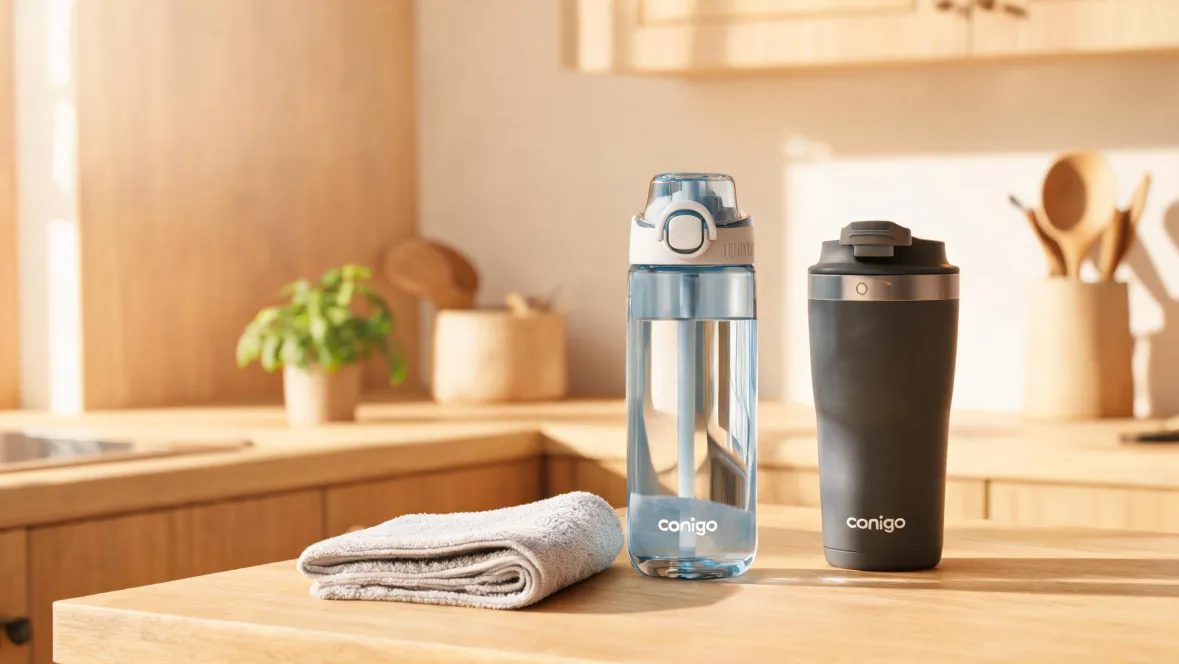
Uncertainty about a purchase often comes down to trust in the maker, and here the evidence points to a corporate parent you've probably used without thinking about it. Calphalon sits inside Newell Brands, the same American conglomerate that owns Rubbermaid storage containers, Contigo water bottles, Coleman outdoor gear, and a long shelf of household names. According to Newell's public brand list, cookware and small appliances sit alongside those familiar products — which matters because it means the company has the supply chain and quality-control infrastructure to back a 10-piece set for years. That doesn't prove the pans will heat evenly, but it does lift Calphalon from the anonymous Amazon sellers whose descriptions vanish after a season. You're not buying from a brand that could dissolve mid-warranty; you're buying from a portfolio that has real resources behind it. That's the kind of backing that makes a purchase feel less like a gamble.
Will It Work on My Induction Cooktop?
Brand backing and a sturdy lid are nice, but the real pause comes when you picture the first breakfast on your induction cooktop. You slide the 10-inch skillet onto the glass surface, and the cooktop may or may not recognize it. Induction hobs rely on a magnetic field that only excites pots with a ferromagnetic base. If your new stainless cookware isn't magnetic, the pan stays cold while the hob flashes an error. It's a silent failure — no heat, no warning beyond a blinking icon. Even a polished finish or a glossy sticker that says 'universal' won't save you if the alloy beneath the surface lacks the right magnetic response. So before you commit to a whole set, you need a way to predict which bases will wake up the burner.
The confusion clears when you look at how induction compatibility is actually measured. In 2022, researchers at the International Conference on Electrical Machines published a method for determining the electromagnetic material properties of ferromagnetic stainless steel used in domestic induction heating. The key finding is that stainless steel isn't one thing — its magnetic behavior depends on the alloy's microstructure, and a standard kitchen test can't see that just by looking. This matters because it tells you why the old 'stainless = magnetic' assumption fails. Some grades of 18/10 steel are nearly non-magnetic, while others have enough ferritic content to couple with the induction coil. The technical paper (DOI: 10.1109/icem51905.2022.9910889) gives manufacturers a way to quantify those properties, but for you, the takeaway is simpler: you can't trust the label 'stainless steel' alone, and you shouldn't feel foolish for checking with a refrigerator magnet. And once you've done that, you'll understand why the same recipe that works on one stainless pan might fail on another from the same shelf.
Once you understand that magnetic properties vary, the next question is whether there's a standard way to check that a specific pan will work. There is. The same research ecosystem that produced the ICEM measurement method also references a compatibility assessment standard, catalogued under DOI: 10.3403/30445162u. That standard outlines how to test the pairing between an induction hob and cookware — the magnetic flux, the contact area, the base thickness — rather than leaving you to guess. Its existence is reassuring: it means your two-dollar magnet test isn't an urban myth; it's a crude version of what industrial labs do. For the Calphalon Classic set, the practical version is to look for the induction symbol on the base or simply stick a magnet to the underside. If it sticks, the pan will heat; if it doesn't, you've saved yourself a doomed demo and can move on before the first scratch.
Comparing Material Strategies: Clad Steel vs. Alternatives
Now that compatibility is checkable, the larger question becomes whether Calphalon's construction justifies the price over a cheaper set. Here the material spec matters. The Calphalon Classic line uses a clad construction — stainless steel layered over an aluminum or copper core — and that layering is exactly what the ASTM specification for copper-clad stainless steel (ASTM b0694-01) describes. That standard, originally written for industrial materials, sets the expectations for how bonded layers behave under thermal stress. For a home cook, the translation is simple: a pan with a thick, fully clad base distributes heat sideways instead of letting a hot spot bloom directly over the burner. Cheaper sets often use a thin magnetic disk glued or stamped onto the base — that disk gets hot, but the sides of the pan stay cold, so you end up with a molten center and raw edges on a stir-fry. The ASTM-backed clad approach is the reason a mid-priced stainless set can still out-cook a budget set on a high-output induction burner.
And here you hit the fork that every cookware shopper faces: buy the full 10-piece set, or assemble your own from individual pans? The set bundles the essentials — a 10-inch and 8-inch fry pan, a 1.5- and 2.5-quart saucepan, a 3-quart sauté pan with cover, and a 5.5-quart Dutch oven. That lineup covers skillet duty, soup nights, and the occasional pot roast. But if you live alone and only sear a steak twice a month, half of those pans will sit nested in a cabinet, while their combined weight takes up a full shelf. On the flip side, buying a la carte usually costs more per piece, and you lose the uniform handles and lids that make a set feel considered. The rule of thumb that emerges is less about the brand and more about your menu: if you cook stovetop meals most days of the week, the set earns its real estate; if you're a weekend-only cook, you can get away with a two-pan kit and a Dutch oven.
Once you've weighed the set's coverage against your cooking habits, the brand support makes the call easier. The same Newell Brands portfolio that underwrites Calphalon also shows up across categories like storage and outdoor gear, which means those product lines get consistent corporate attention — not a once-a-year refresh. For a cookware purchase, that translates to part availability, consistency between batches, and a warranty process that doesn't disappear when a seller account is deactivated. If you're choosing between the Calphalon set and a house-brand stack from a discount retailer, the backing of a large conglomerate is the tiebreaker. It doesn't make the pans non-stick or the induction compatibility automatic, but it does mean your investment is protected by a company that has a reputation to maintain across millions of kitchen countertops. It also means that if a batch of handles ever has a defect, there's a corporate channel to report it through — not just a seller who moved on. That kind of institutional memory is rare in the cookware aisle, and it's worth assigning a dollar value.
The Decision Rule: When to Buy the Calphalon Set
All of this compresses into a three-step decision rule you can reuse for any cookware, not just this set. First, check compatibility before you fall in love: stick a magnet to the base of every piece you're considering. If it doesn't stick, it may still be induction-compatible if the pan has a magnetic layer hidden beneath a non-magnetic surface — check the product's stamped symbols or spec sheet for 'induction-ready.' Second, price the set against your actual menu: count how many of the pieces you'd use in a typical week, and if fewer than half, price those same sizes individually. Third, compare the construction method: look for 'fully clad' or 'tri-ply' rather than 'disc' or 'impact-bonded base.' A fully clad pan costs more to make, which is why budget sets cut that corner. Following those three checks, you'll find that the Calphalon Classic set either scores on all three or falls out early — and you've spent five minutes instead of five aha-moments on a return label.
The turnaround moment in this evaluation wasn't a recipe or a price tag; it was the technical paper about ferromagnetic stainless steel that turned a vague worry into a measurable check. Once you know that magnetic properties can be determined — and that the standard compatibility method exists — the uncertainty collapses. You no longer have to trust a product photo or a forum post; you have a falsifiable test. That matters beyond the Calphalon set: it makes you the kind of buyer who can walk into any store, flip over any pan, and know within thirty seconds whether it will work on your cooktop. The emotional arc of this purchase is really a shift from 'I hope this works' to 'I verified this works,' and the evidence is what makes that shift possible.
Back to the Kitchen: The Verdict in Action
Back on that gray Tuesday, you take the 10-inch skillet and walk it to the fridge. The magnet clicks against the base with a satisfying snap, and you repeat the test on every piece in the set — the 8-inch fry pan, both saucepans, the sauté pan with its glass lid, the Dutch oven. Each base welcomes the magnet. When you place the skillet on the induction cooktop and press power, the glass surface hums and the pan warms within seconds. Butter sizzles evenly across the cooking surface — no hot spots, no cold edges. The set now sits nested next to the stove, and the heavy box that felt daunting this morning has turned into a workhorse you'll reach for every night. You close the cabinet door and smile, because the doubt that started the morning is gone.
And the verdict? The Calphalon Classic 10-piece stainless steel set hits the sweet spot for most home kitchens. It's durable enough for daily searing, induction-compatible at its core, and backed by a corporate parent that won't vanish. It isn't the highest-end cookware you can buy — a fully copper-core set will heat differently, and a lighter aluminum set will feel easier to toss — but it doesn't try to be. It's the set that makes sense when you want stainless performance without the premium price. The key is to verify before you buy: a magnet test takes five minutes, the induction symbol on the base takes two seconds, and the right size set respects both your cabinet and your menu. Do that, and the gray Tuesday box becomes the last cookware decision you'll second-guess for a decade. That's the promise this set makes — and it holds up every time the pan hits the burner.
In short, the Calphalon Classic 10-piece set fits most kitchens when you confirm induction compatibility first. A quick magnet test and a glance at the base symbol are easy checks that turn this durable, brand-backed cookware into a dependable daily driver.

Ingrid Falk
Ingrid Falk is an outdoor living products analyst specializing in fences, pergolas, gazebos, canopies, greenhouses, shade sails, patio sets, outdoor sofas, and weatherproof cushions. She uses ISO 4892-2 and ASTM G154 weathering methods while comparing UV color change, coating adhesion, corrosion resistance, frame load, joint stability, water shedding, and dimensional movement. Her work helps garden retailers, project buyers, and hospitality operators select structures and furniture suited to wind exposure, climate, installation method, maintenance, and expected occupancy.