Contigo Autoseal Chill Stainless Steel Water Bottle: Does It Really Deliver?
2026-08-14 by Ingrid Falk
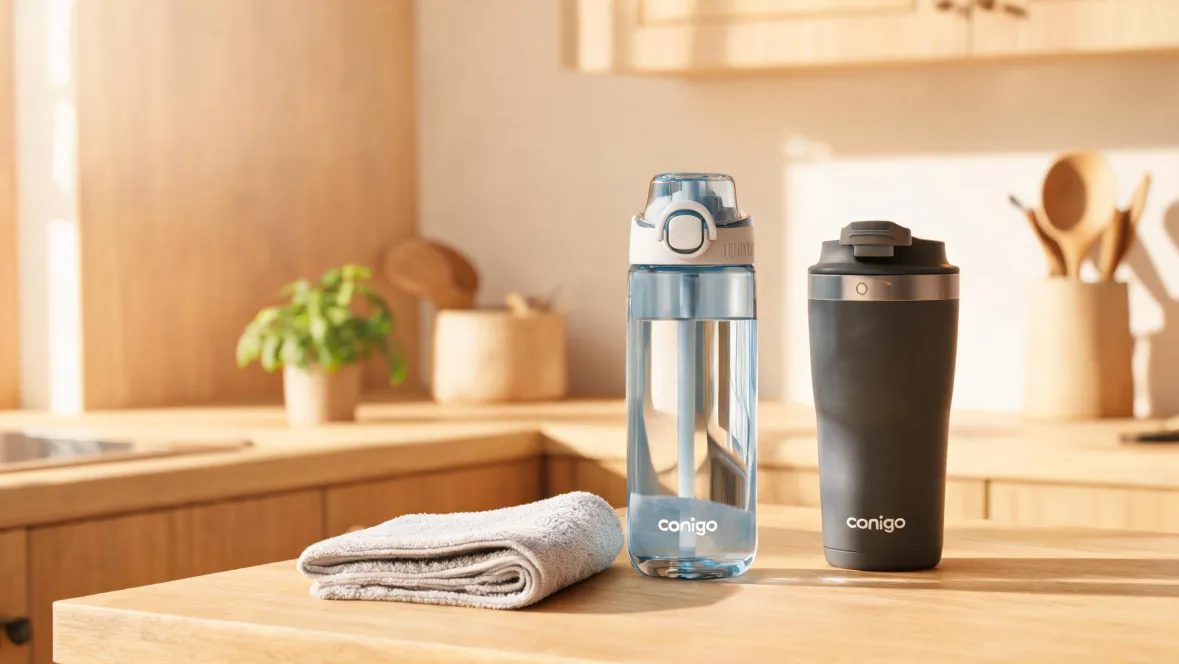
Picture yourself on a gray Tuesday morning, laptop bag slung over one shoulder and a new water bottle in hand. You chose it because it promised to keep your coffee hot, your water cold, and your backpack dry. But after a week of use, you notice a damp ring forming on your notebook. You start to wonder whether the lightweight plastic bottle you swapped out would have been better after all, even if it didn't hold a chill for more than an hour. This is the classic water bottle dilemma: stainless steel, with its weight and insulation, versus plastic, which is lighter but less durable and often less leakproof. Independent tests of more than 50 food storage containers—the same kind of vessels you trust for leftovers—show that the products that survive everyday abuse are the ones that seal completely when closed and clean up easily without staining. In other words, the choice isn't just about material; it's about how well the bottle is engineered to keep liquids inside and to stay hygienic.
The Water Bottle Dilemma: Stainless or Not?
Imagine this: it's a gray Tuesday morning, your laptop bag is slung over your shoulder, and you're carrying a new water bottle that promised to keep coffee hot, water cold, and your backpack dry. After a week, a damp ring appears on your notebook. You start to wonder if the lightweight plastic bottle you swapped out would have been better, even if it didn't hold a chill for more than an hour. That's the classic dilemma: stainless steel offers weight and insulation, while plastic is lighter but often less durable and less leakproof. Independent tests of more than 50 food storage containers—the same kind you trust for leftovers—show that the products that survive everyday abuse are the ones that seal completely when closed and clean up easily without staining. In short, the choice isn't just about material; it's about engineering that keeps liquids inside and stays hygienic.
That distinction matters because most buyers assume any stainless steel bottle is automatically superior to plastic. In reality, material is only half the equation; construction—seal, mouth design—and brand provenance are the other half. A manufacturer with a track record of reliable containers is more likely to have a lid that stays tight after months. The thesis is simple: choosing a stainless steel bottle comes down to material integrity, leakproof construction, and a brand you can trust; Contigo Autoseal Chill is a strong contender, but only if you know what to look for. So before you compare capacities or colors, ask how the bottle closes, how the lid stays put, and whether the company stands behind it.
Why Stainless Steel? Material and Brand Trust
Stainless steel is a durable choice because of its physical properties. A 2022 study presented at the International Conference on Electrical Machines measured the electromagnetic material properties of ferromagnetic stainless steel used in domestic induction heating. That work, documented under DOI 10.1109/icem51905.2022.9910889, looked at how the alloy responds to rapid temperature swings and mechanical stress. The same characteristics that make stainless steel reliable on a stovetop—resistance to warping, high strength-to-weight ratio, and corrosion resistance—translate directly to a bottle that can survive being tossed into a gym bag, dropped on concrete, and subjected to hundreds of thermal cycles without losing its shape or insulating air gap. A thin-gauge wall can still dent, so look for double-wall construction and a gauge that feels substantial in your hand.
Brand provenance gives you a second layer of confidence. Contigo is one of the water bottle brands under Newell Brands, an American conglomerate that also owns Rubbermaid, well known for sturdy storage containers, and Bubba, another bottle line. That corporate lineage matters because a mature consumer-goods company typically has quality control processes, material sourcing standards, and a warranty program that generic no-name bottles lack. When you pick up a Contigo bottle, you are not buying from a company that might vanish next year; you are buying from an organization that has built its reputation on containers and kitchenware for decades. Still, provenance is not a substitute for your own inspection—even a brand with an excellent name can occasionally ship a defective lid, which is why the seal, not the logo, is the true test.
Leakproof: The Real Reason Autoseal Exists
Independent container testing provides the clearest evidence of what separates a good water bottle from a frustrating one. In a 2026 evaluation of food storage containers, reviewers tested more than 50 models made from glass, stainless steel, and BPA-free plastic. The products that earned top placement shared two traits: they were completely leakproof when sealed properly, and they were easy to clean without staining. Think about what that means for a water bottle. The container that goes into your backpack faces the same demands—a jostling commute, a change in air pressure, a loose pocket. If a $15 storage container can pass a spill test with soup, a purpose-built bottle with a sealed lid should be held to that same standard. Leaks are not a minor inconvenience; they are the number one reason people abandon a bottle and go back to single-use plastic.
This is where the Contigo Autoseal feature comes into focus. The name itself points to the mechanism: the lid is designed to seal automatically after each sip, so the drinking spout closes the moment you stop pressing it. The mechanism uses a spring-loaded valve that presses against a gasket, and that simple arrangement is why the Autoseal name matters—it turns a manual lid into a self-correcting one. That design directly targets the most common failure of everyday bottles—the slow drip that starts after you take a drink and set the bottle down. In practice, you should still do an at-home leak test: fill the bottle with water, screw the cap on tightly, turn it upside down, and give it a firm shake. A bottle that passes that test will protect your laptop, your notes, and your car's center console. If it drips, send it back, because no amount of insulation or brand prestige can compensate for a faulty seal.
Sizes and Capacities: Match the Bottle to Your Routine
Once the material and the seal are settled, capacity becomes a practical decision rather than a marketing game. Most everyday bottles fall into three useful tiers: a 16- to 18-ounce bottle for short commutes and office desks, a 24-ounce bottle for gym sessions and lunch-length errands, and a 32-ounce bottle for full workdays outdoors or long road trips. Stainless steel's weight scales with capacity, so a 24-ounce bottle will feel noticeably heavier than its plastic counterpart; that is the price you pay for cold water eight hours later. Choose the size that matches your hydration pattern, not the one that looks impressive in a cup holder. If you typically refill at a sink or water cooler twice a day, a 24-ounce is the sweet spot. If you forget to refill, a 32-ounce may be worth the extra heft.
Consider your actual routine before you buy. Do you drive to a gym where the bottle will rattle in a door pocket, or do you take a train where it sits upright in a backpack beside a laptop? Do you work at a standing desk with a water cooler ten feet away, or are you hiking a trail where the next refill is three miles off? Each scenario changes the ideal size. A bulky 32-ounce bottle feels like a brick in a messenger bag, while a slim 16-ounce bottle means extra trips to the fountain. The right capacity is the one you will actually carry, not the one that holds the most fluid. And once you have the size, you still need to confirm that the bottle fits your hand, your bag, and your car's cup holder—those measurements are just as important as the ounce count.
Easy Cleaning: The Maintenance Factor
The same container test that prized leakproofness also valued easy cleaning. The reviewers noted that top-scoring containers did not trap food in crevices, and they could be washed quickly by hand or in a dishwasher without warping. Water bottles face an even tougher challenge: they hold only water, but they are used daily, and a lid with many parts can become a breeding ground for mold. A bottle that looks sleek but has a complex spout with multiple O-rings and a sliding cover will tempt you to skip the deep clean. The evidence from the 2026 test is that simple designs win—wide mouths, few moving parts, and surfaces that wipe clean in one pass. Those are the same attributes to look for in a reusable bottle, because a bottle that is hard to clean is a bottle that will end up in a drawer.
Maintaining a stainless steel bottle is not difficult, but it does require a routine. Rinse the bottle with warm water after each use, and once a day wash it with mild dish soap and a long-handled bottle brush. Pay attention to the lid: if it has a gasket, remove it and dry it thoroughly before reassembling. Most stainless steel bottles are top-rack dishwasher safe, but heat can degrade the rubber seal over time, so hand-washing the lid is often safer. Never leave water sitting in a sealed bottle for days, because stainless steel can develop an odor if the interior isn't allowed to dry. A quick weekly soak with a tablespoon of baking soda and warm water removes any lingering smell without scratching the surface. This care makes the bottle last for years, so maintenance is part of the decision, not an afterthought.
The Decision Rule: Buy With Confidence
When you are ready to buy, apply a simple decision rule: choose a bottle that is leakproof when sealed, easy to clean, and made by a brand with a proven track record in containers; then pick the size that fits how you actually drink throughout the day. The seal is the first test—if it drips, nothing else matters. The cleaning routine is the second test—if you dread washing it, you will not use it. The brand is the tiebreaker—Contigo, backed by Newell Brands, offers a reasonable starting point, but the rule works for any bottle on the shelf. This approach converts a shelf full of glossy options into a manageable checklist, and it applies to every future purchase you make.
Next time you zip your backpack, you'll trust the bottle inside without a second thought. The lid clicks into place with a firm seal, the weight tells you the steel is substantial, and the wide mouth rinses clean in about ten seconds. No more checking your laptop for damp corners, no more holding it upside down over a sink to see if it weeps. You chose it for the criteria that truly matter—material, seal, and trust—not for a flashy color or a big number. That quiet confidence, born from testing the lid and checking the materials label, is exactly what the decision rule promised.
On the next cloudy morning, when you zip your backpack with a bottle inside, you will know exactly why you chose the one you did. The lid clicks shut with a firm seal, the weight tells you the steel is substantial, and the wide mouth rinses clean in ten seconds. No more checking your laptop for damp corners, no more holding a bottle upside down over a sink to see if it weeps. You have a vessel that does its job, and you made the choice based on the criteria that actually matter—material, seal, and trust—instead of a flashy color or a big number on the label. It is a quiet confidence, the kind that comes from having tested the lid and read the materials label, and it is exactly what the decision rule promised.

Ingrid Falk
Ingrid Falk is an outdoor living products analyst specializing in fences, pergolas, gazebos, canopies, greenhouses, shade sails, patio sets, outdoor sofas, and weatherproof cushions. She uses ISO 4892-2 and ASTM G154 weathering methods while comparing UV color change, coating adhesion, corrosion resistance, frame load, joint stability, water shedding, and dimensional movement. Her work helps garden retailers, project buyers, and hospitality operators select structures and furniture suited to wind exposure, climate, installation method, maintenance, and expected occupancy.