The Contigo Wells 24 oz Filter Bottle: Weighing Brand Trust Against Daily Use
2026-08-13 by Ingrid Falk
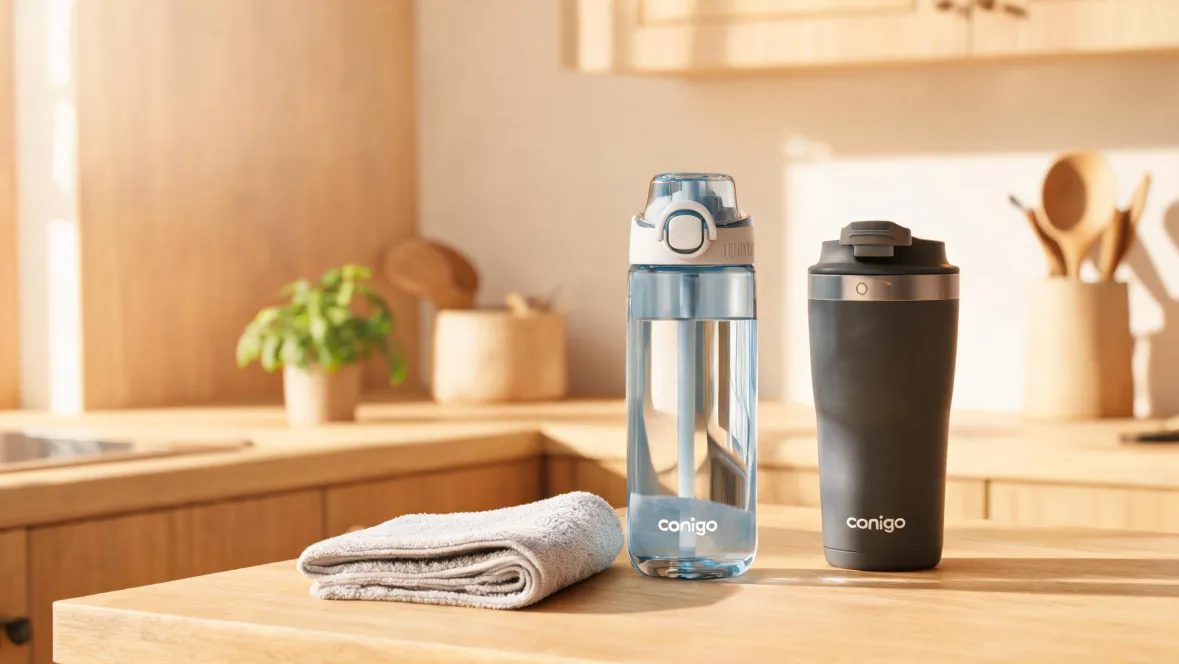
At 6:45 on a Monday, with a leaky old bottle in your bag, the Contigo Wells 24 oz plastic filter bottle catches your eye. It promises a built-in filter, but is that feature worth the extra cost and cleaning? For a commuter who needs a leakproof, tough 24 oz bottle, the real question is whether the filter earns its place—or if the brand's reliability matters more.
The 24 oz Question: When a Water Bottle Meets a Buyer's Daily Routine
Picture this: you're standing in the kitchen at 6:45 on a Monday, trying to get out the door. Your old bottle leaked coffee all over your bag last week, and now you're looking for something better. You've narrowed it down to a 24 oz size—enough for a full afternoon without feeling like you're carrying a jug. The keyword that keeps appearing is 'Contigo Wells 24 oz plastic filter water bottle.' It has a built-in filter, which sounds clever. But as you scroll through options, a question forms: do you actually need a filter, or are you just paying extra for a feature you'll ignore? Your commute involves a desk, a gym bag, and a backpack that gets thrown around. You want something that won't leak, won't crack, and won't make you babysit it. The filter is interesting, but it's also one more part to clean and replace. So you find yourself asking: what really matters in a bottle like this?
A water bottle seems like a simple purchase, but the shelf is crowded. There are steel bottles, plastic bottles, bottles with straws, bottles with filters, and bottles that cost as much as a good dinner. The differences go beyond looks. Some are built to survive drops; others chip on the first fall. Some keep drinks cold for hours; others are just a container. And behind each brand name sits a company with a different reputation. For many shoppers, the brand is a shortcut. A known name can signal quality, but it can also lead you to assume things that aren't true. That's where this decision gets interesting. When you see a product labeled 'Contigo,' you might expect certain things because of the name. But is that expectation justified? To answer that, you have to look at who makes it and what the brand actually promises. Only then can you compare it fairly against simpler bottles that have no filter at all.
So the real question isn't only whether the Contigo Wells 24 oz plastic filter water bottle is a good product. It's whether the package of brand, material, capacity, and extra feature fits the way you live. A filter might be useful if you fill from questionable taps. But if your main need is a reliable bottle that goes from desk to gym without drama, the filter could be nothing more than a clever gimmick. The decision comes down to a trade-off: the filter adds a small benefit and a small burden, while the brand and the plastic body carry most of the daily weight. In the next sections, we'll unpack what the Contigo name really is, what container standards you should care about, and how to turn this into a simple choice. So keep that trade-off in mind as you read.
Under the Label: What the Contigo Name Carries
Before you judge the bottle, you need to know who makes it. Contigo is not a startup with a single product. It sits inside Newell Brands, a large American conglomerate that also owns Rubbermaid storage containers, Coleman outdoor gear, and a list of other household names. That fact matters because it tells you something about the resources behind the product. A company of that size has quality-control processes, distribution networks, and a reputation to protect. When you buy a Contigo bottle, you're buying from the same corporate family that makes the popular Rubbermaid containers you might already trust. This doesn't guarantee that every bottle is perfect, but it does raise the floor on what you can expect. A no-name bottle could be made in any factory with unknown materials and testing. A Newell brand, on the other hand, has more to lose. So this background gives you a concrete reason to take the brand seriously before you even open the product listing.
Now look at what Contigo says about itself. On its official pages, you'll find the phrase 'the right connection' repeated. That phrase is meant to convey trust and security—the idea that the brand connects you to the things you value. But here's the catch: those pages are actually about Contigo's other business, GPS tracking for vehicles and personnel. So if you land on the site expecting to see water bottle specs, you might be confused. That's a classic case of a brand name covering more than one line. It also explains why you shouldn't assume that every 'Contigo' message describes your bottle. The marketing language about 'the right connection' still sets a tone: the company cares about reliability. But you need to apply that idea to the bottle itself, not to a GPS dashboard. So when you read 'the right connection,' ask yourself: does my bottle connect with my routine? That's the real test.
Plastic, Filter, 24 oz: Comparing What Matters
To judge any portable container, you need standards. Independent testing of food storage containers, like the one from Serious Eats, points to three core expectations: leakproof design, durability, and easy cleaning. In their testing, they tried ten sets and found five that met those standards. Leakproof is obvious—no one wants a damp backpack. Durability matters because a bottle gets knocked around; easy cleaning matters because a filter or complicated lid can hide grime. These are the same criteria you'd apply to a water bottle. When you look at the Contigo Wells, you should check the lid seals, the plastic's resistance to drops, and how hard it is to take apart for washing. The filter adds a fourth consideration: replacing it and keeping it clean. None of this is unique to Contigo, but it gives you a checklist. If a bottle fails on leak-resistance or seems fragile, no filter can save it. These basics are the floor, and they come before you weigh the filter's benefit.
Looking at the wider market reinforces how many options you have. A typical brand's food storage lineup, for example, shows dozens of containers—one page lists twenty-four out of seventy-three results, with customer ratings like 4.5 stars from over 1,600 reviews and 4.7 stars from over 250 reviews. That's a market where performance and price are constantly compared. It means you never have to settle for a single feature. The question becomes: what does the filter actually add? If you fill your bottle from clean tap water and drink it within hours, the filter's impact on taste is likely to be small. If you're hiking or traveling where water quality is uncertain, it might be more valuable. But for the typical desk-to-gym commute, the filter is a 'nice-to-have,' not a must-have. So before you decide, ask yourself how often you'd really use it. The answer separates a smart purchase from a marketing impulse.
The Turn: Choosing Between Brand Promise and Specs
Now we reach the turn. After looking at the brand and the standards, a clear verdict emerges: for most everyday commutes, the filter is a nice-to-have, not a must-have. The deciding factors are leakproof design and whether the plastic body survives drops. This is where Contigo's promise of 'the right connection' becomes meaningful—but only if you connect it to the bottle's actual job. The brand is backed by Newell, which gives you confidence in basic quality. That trust is a real advantage, especially if you've been burned by a flimsy bottle from an unknown maker. But it doesn't make the filter essential. If you're the type of commuter who fills up in the morning and drinks through the afternoon, a simple, solid bottle would do most of the work. The Contigo Wells adds a filter, but you have to decide whether that feature earns its place in your bag. For most people, the answer is: it's fine to have, but not the reason to buy. The brand and portability are the main reasons.
Here's the question to ask yourself before you check out: how often do you actually need a filter? If you're a traveler who refills from unknown taps, a filter can be a security net. But if you're a commuter who fills from home or an office cooler, you're carrying extra bulk and an extra part to maintain for almost no benefit. Think about the 24 oz capacity—it's a good middle ground, not too heavy, not too small. But that capacity should serve your routine, not a marketing story. Would a plain plastic bottle with a solid lid do the same job for less money? Probably. Would you mind replacing filter cartridges every few weeks? Probably. So the decision rule becomes: choose the Contigo Wells if you want the reassurance of a known brand and the option of filtering, but know that the filter is a bonus, not the main event. The main event is a bottle that keeps water in and leaks out.
Back in the Bag: What Happens After the Choice
Let's say you make the choice. If you pick the Contigo Wells, what happens next? You fill it in the morning, toss it in your bag, and it sits there until you reach for it. The filter is there if you want it, but a lot of days you might not notice it at all. What you do notice is the lid staying closed and the plastic holding up when you drop it on the gym floor. Over weeks of use, the decision rule you formed becomes a habit: you chose because the brand seemed reliable and the size fit your day. The filter remains an open option, not a constant requirement. And if you instead chose a simpler bottle, you'd have made the same calculation with one less variable. Either way, the pattern is the same: a good bottle is one that disappears into your routine. The best test isn't how many features it has—it's whether you stop thinking about it after the first week.
So here's the question that stays with you: what does 'the right connection' mean for your own hydration? You've seen the brand, the standards, and the trade-off. You know that the filter is a bonus, not a requirement. Now imagine tomorrow morning. You're at the counter again, 6:45, your bag open. Do you reach for the Contigo Wells, or do you grab the plain bottle that was already there? The answer isn't about which is objectively better—it's about which one fits the way you actually live. A bottle that connects with your routine is worth more than one with a feature you rarely use. So the next time you face a crowded shelf of water bottles, carry that question forward. It will serve you better than any brand slogan.
When you stand at the counter tomorrow morning, the choice isn't about objective superiority—it's about fit. A bottle that disappears into your routine, whether it's the Contigo Wells or a simpler model, is the one worth keeping. So weigh the filter's burden against your actual hydration habits, and let that judgment guide you past any brand slogan.

Ingrid Falk
Ingrid Falk is an outdoor living products analyst specializing in fences, pergolas, gazebos, canopies, greenhouses, shade sails, patio sets, outdoor sofas, and weatherproof cushions. She uses ISO 4892-2 and ASTM G154 weathering methods while comparing UV color change, coating adhesion, corrosion resistance, frame load, joint stability, water shedding, and dimensional movement. Her work helps garden retailers, project buyers, and hospitality operators select structures and furniture suited to wind exposure, climate, installation method, maintenance, and expected occupancy.