Contigo Autoseal Chill vs. Generic Steel Bottle: Which Earns a Place in Your Bag?
2026-08-19 by Ingrid Falk
-
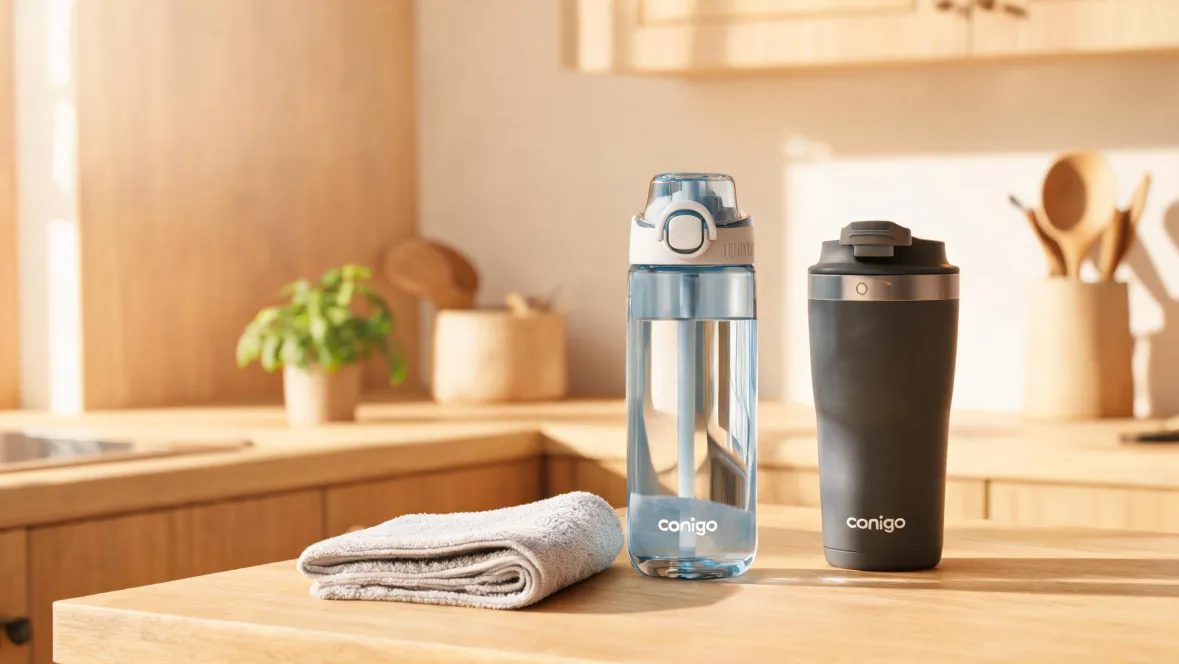
Two bottles, one decision: what separates a premium water bottle from a generic one?
-
Stainless steel vs. the alternatives: why the material list matters
-
Leakproof engineering: how sealing changes the daily carry
-
Brand trust and the right connection: what Contigo's engineering language tells you
-
Decision framework: placing the Autoseal Chill among its peers
-
Final call: when the Autoseal Chill earns its place in your bag
You're comparing two stainless steel bottles: the Contigo Autoseal Chill and a generic store-brand version. They look alike—double walls, a comfortable grip, a flip lid. But which one truly survives a week in your bag? The cheap bottle promises the same insulation, yet the real differences stay hidden until you've thrown it in with your laptop and rushed onto a train. The question isn't just price; it's which one you can trust with your daily routine. Three things separate premium from ordinary: material, seal engineering, and brand. These turn a good-looking object into a daily workhorse or leave it forgotten in a drawer.
Two bottles, one decision: what separates a premium water bottle from a generic one?
That first glance can be deceiving. The Contigo Autoseal Chill and a generic store-brand bottle look nearly identical—double walls, a comfortable grip, a flip lid. But the cheap bottle promises the same insulation, yet the real differences only show up once you've tossed it in with your laptop and dashed for a train. So the question isn't just about price; it's about which one you can trust with your daily routine. Three dimensions separate a premium bottle from an ordinary one: the material, the seal engineering, and the brand behind it. These are what turn a good-looking object into a daily workhorse—or leave it forgotten in a drawer.
That last point—brand backing—deserves more attention than it usually gets. The Contigo name comes from Newell Brands, an American conglomerate whose portfolio includes Rubbermaid, Coleman, and other household names. When you buy a bottle from a company that already makes storage containers and outdoor gear, you're buying into a design process shaped by decades of consumer product engineering. Newell Brands explicitly lists Contigo and Bubba water bottles alongside its storage and organization products, which tells you that hydration is a core category for them, not a sideline. That doesn't guarantee perfection, but it means the company has a reputation to protect and the resources to back up warranties and replacement parts. For a daily-carry item, that support separates a one-time buy from a product that lasts.
Picture a weekday: you toss the bottle into your work bag next to your laptop, jump on a crowded train, and don't think about it until lunch. When you pull it out, you don't want a damp sleeve or a puddle by your charger. Later, at the office sink, you want to rinse it without crevices trapping old coffee. That's the daily test that separates smart engineering from marketing specs. If a bottle leaks or is hard to clean, insulation numbers won't make you carry it daily. That's why the seal, material, and brand reliability matter more than claimed ice retention.
Stainless steel vs. the alternatives: why the material list matters
Stainless steel isn't just a fancy material—it's an alloy family with practical properties. A 2022 paper in the International Conference on Electrical Machines studied the electromagnetic properties of ferromagnetic stainless steel in domestic induction heating, showing that even the metal's internal structure gets engineering attention. For bottles, stainless steel offers a high strength-to-weight ratio, doesn't absorb flavors, and resists staining better than plastic. But it conducts heat, so double-wall construction and vacuum insulation keep drinks cold without sweating. The material sets the foundation: a well-made steel bottle can handle drops, withstand washing, and stay odor-free for years. That foundation matters because the best seal can't save a body that cracks. So pay attention to the material first—it's the base layer of the whole system.
Independent container tests back up the material-construction link. In a 2026 roundup of food storage containers, testers evaluated over 50 glass, stainless steel, and plastic options, looking for vessels that are durable and easy to clean. Their findings: containers kept foods fresh for days without staining, and when sealed properly, proved completely leakproof. The same criteria apply to water bottles. You want a body that survives daily knocks, a surface that rinses clean without holding odors, and a lid that never lets liquid escape. Independent labs treat leakproofness and cleanability as core requirements, not luxury extras. When a bottle passes those tests, it's ready for your bag.
If material and cleanliness are so important, why do many steel bottles end up unused? The answer is usually the seal, not the steel. A metal body can be flawless, but if the lid drips or the gasket wears out, the bottle becomes a liability. That's why the next question isn't about material—it's about the engineering that keeps your water where it belongs. Independent testing and brand choices start to separate the everyday workhorse from the occasional novelty. A bottle that makes you double-check its lid every time you leave the house is one you'll eventually abandon. So focus on the seal first. It's the gatekeeper.
Leakproof engineering: how sealing changes the daily carry
Container tests that praised easy-clean materials also highlighted sealing. When they said containers 'when sealed properly, proved completely leakproof,' they made a conditional statement: leakproofness depends on design. It depends on the lid's geometry, the gasket's quality, and how parts mate. In a water bottle, that system is the Autoseal mechanism—a one-touch lid that stays closed between sips, often with a lock to prevent accidental opening. This isn't just convenience; it's the engineering answer to daily carry. If a bottle can survive being tossed upside down in a backpack without shedding a drop, it has passed the most practical test a commuter can throw at it. That's the kind of reliability you want before you trust a bottle with your electronics.
Compare a bottle with a simple screw cap to one with a dedicated seal. A screw cap needs two hands, a quarter turn, and attention every time—forget to tighten it, and you'll find the mess. A push-button lid offers one-handed operation and a positive click that says closed. The engineering reduces the moments where a leak can happen. Fewer steps between drinking and closed means fewer chances for error, which is why seal design can make or break a bottle's daily usefulness. That difference is especially visible when you're juggling a bag and a coffee in the other hand. It's the difference between a bottle that works with you and one that fights you. Choose the former.
With independent tests showing that proper sealing yields leakproof containers, the real question is: does the Contigo Autoseal Chill deliver in everyday use? That's about quality control and brand commitment. A seal can be perfect on paper, but if the gasket isn't seated right or materials deform, the design fails. That's why the company behind the bottle matters. Before you decide, look at what the brand says about its priorities—those words reveal whether durability is an engineering goal or just a slogan. A company that talks about protection is more likely to invest in seals than one that only talks about colors. That's a signal worth reading.
Brand trust and the right connection: what Contigo's engineering language tells you
Contigo's materials use a telling phrase: 'the right connection.' The brand positions itself as helping people 'manage and secure what you value most.' That language was written for GPS products, but it carries over to water bottles: a good bottle protects something valuable—your hydration, your day, your peace of mind. When a company frames its mission around security, it signals that reliability is part of the design brief. That mindset translates into lid locks, thick gaskets, and drop-tested bodies. This is how brand philosophy becomes product behavior. It's not magic; it's engineering priorities. When a company says it helps you secure what you value, it's telling you where its design budget goes.
Contigo also says it offers 'two solutions' in tracking, meaning it doesn't force a one-size-fits-all design. For water bottles, that means different sizes and cap styles—like the Autoseal Chill and the Autoseal line's press-to-drink options. Having multiple models suggests the company has studied different use cases and engineers for each, not just pushes a generic design. This variety signals maturity: it's harder to make one bottle for everyone than to develop specific models for commuters, athletes, and desk workers. That's why seeing a portfolio of designs boosts confidence in the model you're considering. It tells you the company has thought about real-world scenarios, not just shelf appeal. That's the kind of thinking that leads to a better daily bottle.
How much should you trust brand language? It's fair to be skeptical. But the combination of an established parent company, independent tests, and a clear philosophy adds up. The real test is whether those words appear in the details: does the lid lock? Can you clean it easily? Does the warranty cover the seal? You can answer these before buying. They're more useful than any single review. The next section gives you a framework to weigh these factors. When you use it, you'll stop relying on gut feel and start comparing what actually matters. That's how you make a decision you won't regret.
Decision framework: placing the Autoseal Chill among its peers
Put the three dimensions together—material, sealing, and brand reliability—and you get a simple way to evaluate any bottle. Material determines how it feels, how long it lasts, and whether it keeps flavors. Seal determines whether the bottle is a companion or a leak risk. Brand determines whether you're backed by a company that stands behind defects. None alone is enough; a great seal on a brittle plastic bottle still fails, and a premium brand can't fix a poor design. You need all three to align for a bottle to earn a permanent spot in your routine. That's why the matrix in the next part focuses on these three axes instead of marketing numbers. It's a reusable framework.
Here's how to build the comparison yourself. Start with material: choose stainless steel for durability and no lingering smells; plastic is lighter but absorbs odors and scratches. Next, test the seal: look for a lid with a clear closed position, ideally a lock, and a replaceable gasket. Finally, consider the brand: check the parent company's track record, warranty language, and independent testing. When you place the Autoseal Chill next to a generic bottle, the generic wins on price but loses on seal design and brand support. That's a compromise you have to decide whether you're willing to make. If you've ever had to wring out a backpack, you know the answer already. So weigh it carefully.
To use the framework, don't just check boxes—weight them according to your life. If you're a daily commuter with electronics, seal performance is your top priority. If you keep the bottle on your desk, material and ease of cleaning matter more. If you've been burned by bottles that fall apart, put more weight on brand reliability. The right choice is the one that scores highest on the factors that affect your routine, not the one with the flashiest marketing. Be honest about what actually annoys you in a bottle—then choose accordingly. The framework only works if you feed in your real habits, not your ideal ones. That's what separates a helpful tool from a self-deception. Use it wisely.
Final call: when the Autoseal Chill earns its place in your bag
So where does the Autoseal Chill land? If your daily carry involves a bag, a commute, and grabbing water without thinking, this bottle earns its place. Its steel body addresses durability and cleanliness, the Autoseal mechanism answers the leak problem, and Newell Brands provides accountability. You're paying a premium, but you're buying engineering that targets the three failure points that make most bottles end up unused. That's a strong case for the price difference. If you've already abandoned a few 'reusable' bottles, this one is designed around the exact reasons you did. It's not a magic solution, but it's a sensible one. And in a daily carry context, sensible wins. That's the verdict.
The reusable rule is this: buy the bottle that makes the seal the first priority, the material second, and the brand third—but only after verifying each is above a minimum bar. For the Autoseal Chill, the seal is the differentiator. If you've ever dried out a laptop bag because of a leak, you'll understand why a one-touch lock is worth the extra cost. If you rarely carry a bottle in a bag, a cheaper option might serve you fine. The rule isn't 'always buy Contigo'; it's 'always choose the bottle that eliminates your biggest daily annoyance, even if it costs more.' Keep that rule handy for any future bottle purchase. It will save you from making the same mistake twice.
Back to the commuter: the bottle stays shut, the laptop stays dry, and the day goes smoothly. At lunch, a quick rinse keeps the interior fresh, and at the end of the week, the bottle still works like day one. That's the outcome the Autoseal Chill is designed to deliver—not because of any single spec, but because material, seal, and brand support all point the same way. When those three align, you're not just buying a bottle; you're buying a daily ritual that doesn't add friction. That's the real test of a water bottle: whether it disappears into your routine. And this one does. Exactly as good engineering should.

Ingrid Falk
Ingrid Falk is an outdoor living products analyst specializing in fences, pergolas, gazebos, canopies, greenhouses, shade sails, patio sets, outdoor sofas, and weatherproof cushions. She uses ISO 4892-2 and ASTM G154 weathering methods while comparing UV color change, coating adhesion, corrosion resistance, frame load, joint stability, water shedding, and dimensional movement. Her work helps garden retailers, project buyers, and hospitality operators select structures and furniture suited to wind exposure, climate, installation method, maintenance, and expected occupancy.