Contigo Kids Aubrey Stainless Steel Water Bottle: A Practical Decision Framework
2026-08-19 by Ingrid Falk
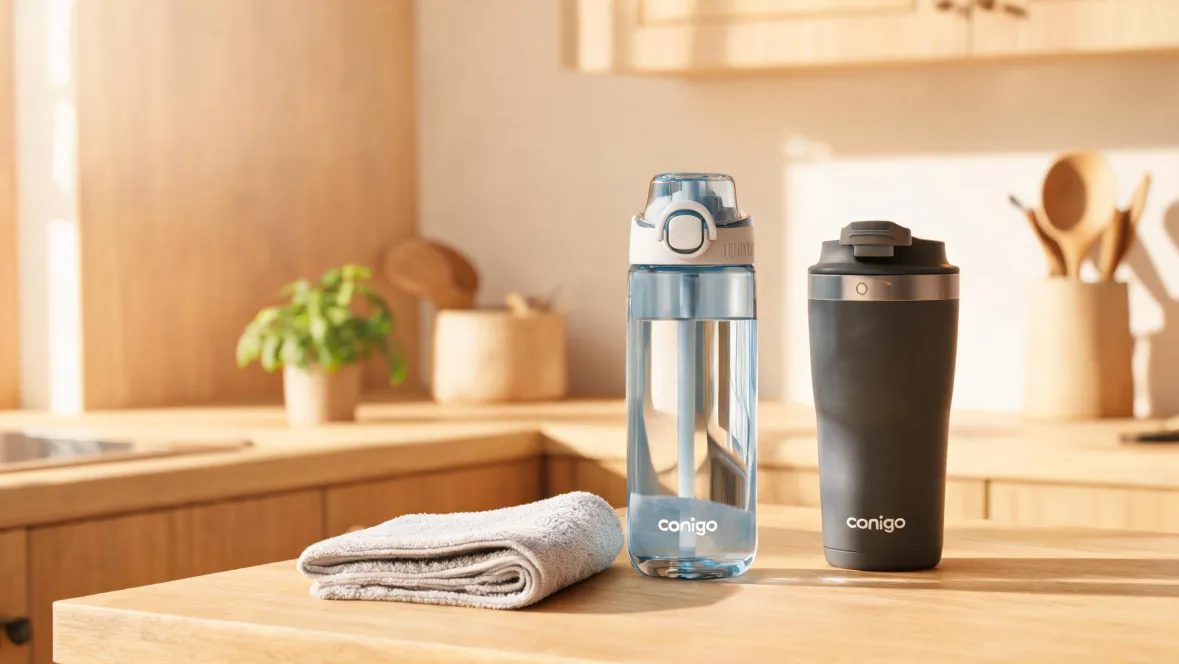
Picture the school-supply aisle: a light plastic bottle in one hand, a heavier stainless steel one in the other. Your child has already soaked two backpacks this year. Steel feels tougher, but will it leak less? And can small hands manage the lid? That is the dilemma parents face.
The Parent's Dilemma: Plastic or Stainless Steel?
Plastic bottles win on price and weight, but they scratch, absorb odors, and raise long-term safety questions. Stainless steel is durable, doesn't retain flavors, and is easy to clean. The catch is that it's heavier, often twice the price, and some kids struggle to open or carry it. The safety argument for steel is obvious, but the practical question remains: can your child actually handle it? The answer isn't on the price tag.
Container testing offers a reality check. In a review of more than 50 food storage containers made from glass, stainless steel, and BPA-free plastic, the models that earned top marks kept food fresh for days without staining and, when sealed properly, proved completely leakproof. That tells us material alone doesn't guarantee performance. A steel bottle with a poorly fitting lid will leak just as much as a cheap plastic one. Durability and leakproofness depend on the closure as much as the body.
Given steel's clear advantages, why do parents hesitate? Because practical details matter more than the metal. Weight, lid design, and how easily small hands open and close the bottle affect whether your child will actually use it. A bottle that's too heavy or too hard to operate will end up ignored. So before you spend extra on steel, ask what specifically makes it worth the upgrade for your child's daily routine.
Why Stainless Steel Makes Sense for Kids
Stainless steel is not just a marketing buzzword; it's a material with well-understood physical properties. Technical research, such as a 2022 study on ferromagnetic stainless steel used in induction heating, confirms that stainless steel can be precisely characterized for real-world applications. This means manufacturers can engineer bottles with consistent wall thickness, corrosion resistance, and impact strength. For a child's bottle, that translates into a vessel that won't react with juice or milk, won't retain stubborn odors, and won't crack when dropped.
Real-world testing supports this. The food container review showed stainless steel models staying fresh and stain-free for days, and, when sealed properly, they proved completely leakproof. The difference among top performers often came down to how securely the lid locked, not the body material. Stainless steel resists staining and doesn't absorb smells, making it easier to keep clean than plastic. That's why it's a common choice for food storage and a sensible baseline for a kids' bottle.
Yet not all steel bottles are equal. Two bottles can be made from the same steel, but one has a heavy, complicated lid that a child struggles to twist, while the other has a simple latch that clicks shut with one hand. Both are steel, but only one will survive a school year without leaking. The material is a necessary foundation, but it's not sufficient. What separates a great kids' bottle from a frustrating one is the connection between lid and body.
The Leakproof Factor: What Actually Prevents Spills
The evidence is clear: leakproofness depends on the seal, not the material label. In container testing, containers that leaked did so because of poor seals, even when the body was stainless steel. For a kids' bottle, the gasket and latch are what keep water inside the backpack. A thick steel wall cannot compensate for a seal that doesn't compress evenly. So when you evaluate a bottle, inspect the lid first, not the metal thickness.
What should you look for in a seal? The gasket should sit snugly and stay in place when the lid is closed. The latch should lock firmly without needing adult strength, and your child should be able to open it independently without spraying water. Cleaning matters too: a seal that's hard to remove will trap residue and start to smell. These practical features outweigh insulation ratings or color choices.
Think about the morning rush. A hurried child won't align a tricky lid carefully; they'll slam it shut. If the seal isn't foolproof, the backpack suffers. The real test is whether the design works for a six-year-old with small hands and limited patience. If your child can't open and close it easily without spilling, it's not the right bottle, no matter how strong the steel is.
Trusting the Brand: Contigo's Track Record
One way to evaluate a bottle is to look at the company that makes it. Contigo is part of Newell Brands, an American conglomerate that also owns Rubbermaid and Coleman. Being under such an umbrella brings accountability: if a product fails, there's a reputation at stake that extends beyond a single bottle. A major corporation typically has quality-control processes, customer service, and a track record it can't afford to ignore.
Newell's portfolio includes storage, outdoor, and children's products, categories where durable materials and secure closures are essential. That experience carries into Contigo's water bottles. A parent company large enough to invest in testing and supply-chain oversight raises the odds that the bottle was made responsibly. If something goes wrong, you can reach someone and invoke a warranty, which is harder with an anonymous online seller.
However, brand trust should never replace hands-on evaluation. A generic bottle can work perfectly, and a big-name product can disappoint. The question is how much risk you're willing to absorb. For a school supply that gets dropped daily, a recognized brand with a parent company often feels safer. But if you're on a budget, a generic option may be fine once you check the seal carefully.
Your Decision Rule for Choosing a Kids' Bottle
By now, you have a clear framework. First, material matters: stainless steel offers durability, safety, and easy cleaning. Second, seal matters more: a bottle is only leakproof if the lid and gasket create a reliable connection. Third, brand accountability is a useful tiebreaker: a company with a reputation is more likely to stand behind its product. Fourth, don't forget the user: your child has to be able to carry, open, and operate it without help.
Applying this to the Contigo Kids Aubrey, it checks most of the boxes. The stainless steel body is the kind of durable, easy-to-clean material that performed well in container testing, where the best stayed leakproof and stain-free. The brand's engineering focus on connections aligns with the evidence that seals matter most. And Contigo's place within Newell Brands adds accountability. The verdict: a strong yes for kids ready for the weight and able to master the latch, but a cautious check-first for toddlers.
Here is a simple rule you can apply to any kids' bottle. First, open the lid and inspect the seal: it should sit snugly and click firmly. Second, fill the bottle and ask your child to hold it for a minute to judge the weight. Third, check the brand: is there a customer service number on the package and does it belong to a company you can call? If yes to all three, you've found a keeper. That's the whole rule: seal, weight, and accountability.
So next time you're in that aisle, you won't have to choose between safe and practical. Run the rule: seal, weight, and accountability. It works for the Contigo Kids Aubrey and for any other bottle you consider. That's the right connection for your family—and a standard that never leaks.

Ingrid Falk
Ingrid Falk is an outdoor living products analyst specializing in fences, pergolas, gazebos, canopies, greenhouses, shade sails, patio sets, outdoor sofas, and weatherproof cushions. She uses ISO 4892-2 and ASTM G154 weathering methods while comparing UV color change, coating adhesion, corrosion resistance, frame load, joint stability, water shedding, and dimensional movement. Her work helps garden retailers, project buyers, and hospitality operators select structures and furniture suited to wind exposure, climate, installation method, maintenance, and expected occupancy.