Is the Contigo Kids Aubrey Stainless Steel Water Bottle Worth It?
2026-08-20 by Ingrid Falk
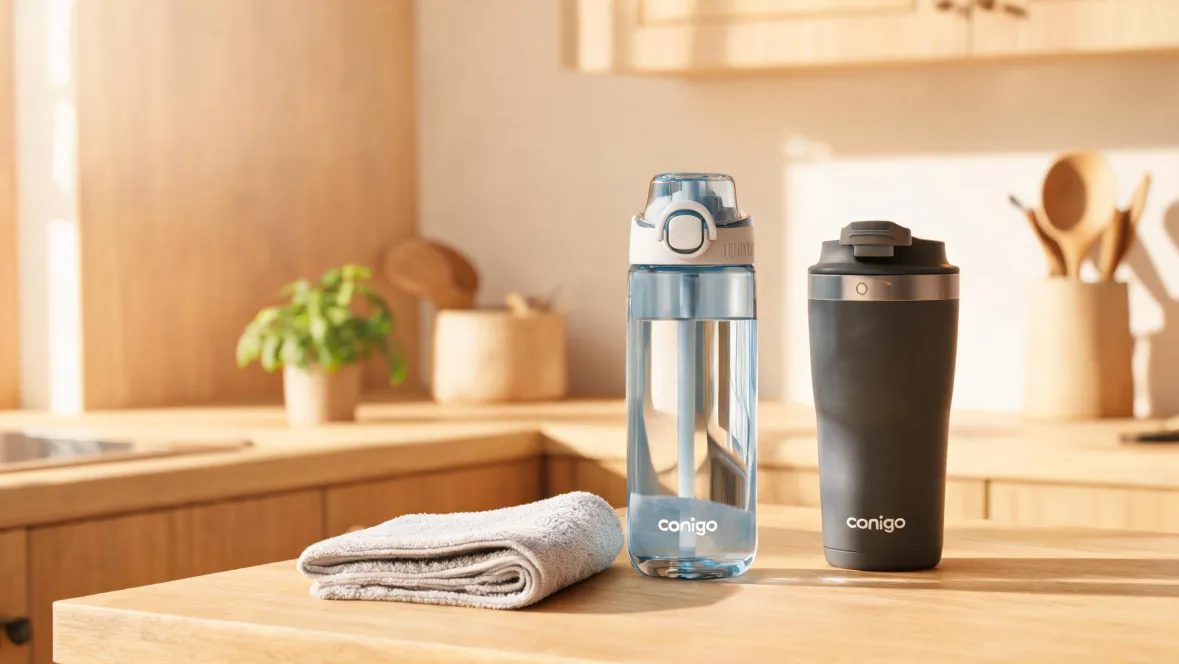
Picture this: you are standing in a store aisle, trying to choose a water bottle for a six-year-old's school day. In one hand is a light plastic bottle that your child can carry with one finger; in the other is the Contigo Kids Aubrey, a stainless steel bottle that looks tough but feels noticeably heavier. You want the safe choice, but the safe choice is not obvious. Is safety about the material, the lid, or the weight? Every brand shouts 'BPA-free' and 'durable,' so those words lose meaning. This article gives you a three-step decision framework so you can stop guessing and start comparing bottles on the things that actually matter: material safety, leak-proof sealing, and age fit.
The choice that stumps every parent
In practice, most parents assume that 'stainless steel' automatically means safer and sturdier, but that assumption hides the actual real-world trade-off. Steel is less likely to leach chemicals and more resistant to drops, yet it adds measurable weight and conducts heat, which means it works well only when the design compensates. The confusion grows because every brand claims to be 'safe' and 'BPA-free', making those words useless. The Contigo Aubrey, with its reputation from a major parent company, looks like a safe bet, but whether it is worth it depends on three things your child will interact with daily: the material grade under the paint, the lid's sealing mechanism, and how heavy the filled bottle feels in a small hand. These are not marketing claims; they are engineering details you can check. And they matter before you spend a dollar. Next, we'll look at what the material really delivers—and what it costs.
To turn those three details into a usable rule, we have organized them into a sequence of tests. The first test is material safety: does the bottle use a food-grade stainless steel with a clear lining? The second is leak-proof function: does the lid seal reliably, sideways, upside down, after a month of use? The third is age fit: can your child carry, open, and drink from it without help? Each test has different evidence behind it, and none can be skipped. A bottle that fails the material test may be unsafe; one that fails the leak test will create constant mess; one that fails the age test will end up unused. The order is deliberate: verify the material first, then the seal, then the fit. If you apply this sequence, you will not be swayed by packaging or celebrity endorsements. You will be evaluating the bottle the way an engineer would.
What stainless steel actually buys you (and what it costs)
To understand what stainless steel truly offers, let's look at the material science behind it. A 2022 paper presented at the International Conference on Electrical Machines (DOI: 10.1109/ICEM51905.2022.9910889) examined the electromagnetic properties of ferromagnetic stainless steel used in domestic induction heating. The study was not about water bottles, but it tells us something important: stainless steel is a material with measurable structural and thermal characteristics that engineers rely on for demanding applications. For a child's bottle, that means the steel can take a beating and resist corrosion, which is why a steel bottle can last for years when a plastic one might crack or scratch. The catch is that these engineering properties are not free. Steel is denser than plastic, so a fully steel bottle carries a weight penalty. And because steel conducts heat well, a bottle left in a warm car will warm up its contents faster than an insulated plastic design. So the material argument is real, but it only matters if the rest of the bottle is built to take advantage of it. That is why the material test is the first step, not the last.
Independent testing of food storage containers—including stainless steel, glass, and plastic options—reinforces this point. A 2026 review from a major shopping publication tested more than 50 containers and found that the ones that made the list kept food fresh for days without staining, and, when sealed properly, proved completely leak-proof. That result is striking because it did not single out stainless steel as the winner. Instead, the common thread among the top performers was careful design of the seal and the rim. In other words, a well-made plastic container can outperform a poorly made steel one in everyday leaking and staining, even though steel has the superior material profile. For parents, this means you cannot buy a bottle on materials alone. You have to inspect how the lid seats against the body and how the material is finished, because that is where practical reliability is won or lost.
The practical bottom line is that stainless steel buys you two real things: freedom from the guesswork about leaching chemicals and a body that will not crack after a drop. It costs you weight and, often, price. A lightweight plastic bottle might be fine for a toddler who can barely lift a full liter, while a growing elementary school student can manage the extra ounces. The material only becomes an advantage when the bottle is designed to capitalize on it—with a comfortable grip, a wide enough mouth for cleaning, and a lid that seals with a satisfying click. So do not ask 'is steel better?' Ask 'is this steel bottle better for my child's hands, backpack, and routine?' And the answer will change as your child grows, because the fit test is the one that shifts fastest.
Leak-proof is not optional when you have a backpack
Of all the features a kid's bottle can have, a leak-proof seal is the one that saves the most daily misery. The same independent container test we mentioned earlier made this crystal clear: among the dozens of containers evaluated, those that were truly leak-proof shared a common trait—a well-designed sealing mechanism, not a specific material. The testers found that when sealed properly, the containers proved completely leak-proof. That condition—'when sealed properly'—is the whole game. A bottle can be made of aerospace-grade titanium, but if the lid does not create an even, watertight barrier when it is closed, it will still soak your child's homework. For the Contigo Aubrey and other steel bottles, the sealing mechanism is usually a silicone gasket that presses against the rim. Over time, that gasket can wear, deform, or get misaligned, which is why a bottle that was leak-proof on day one may start weeping after months of dishwasher cycles. The evidence shifts the priority: check the lid, not the logo.
Picture a typical school morning: you are in a hurry, you fill the bottle, screw on the lid, and shove it into the side pocket of the backpack. Ten minutes later, the bottle is upside down under a heavier textbook. If the seal fails, water trickles into the bag, and by lunchtime, the only thing your child can safely drink is the juice box in the lunch box. That is not a rare accident; it is a weekly occurrence in many households. The test for a good seal is easy: fill the bottle with water, close it, and squeeze the body gently while holding it upside down. No drops means the gasket is seating correctly. For a child, you also want a lid that is easy to open and close independently, because a lid that requires adult strength will get left loose all day, defeating the seal. So leak-proof is not a luxury feature; it is the price of admission for any bottle that will travel in a bag.
Does the brand name matter behind the steel?
Behind the Contigo name sits Newell Brands, a major American consumer products conglomerate. According to its corporate profile, Newell owns well-known household names ranging from Rubbermaid and Coleman to Contigo and Bubba beverage bottles. That scale matters in a subtle way: a company that mass-produces millions of food-contact items has to maintain manufacturing consistency and quality control across product lines, because a single contamination scandal would damage revenue across dozens of brands. Brand ownership, then, offers a baseline signal of manufacturing discipline. It is not a guarantee of a perfect bottle, but it does reduce the odds of buying an unbranded import with unknown steel sourcing. The evidence here is about corporate structure, not about the Aubrey model specifically, so it should be treated as a weak, non-zero signal. Newell's breadth also means it has experience with safety regulations across many product categories, which adds a thin layer of credibility.
That said, the brand name does not give you permission to skip the tests. Newell's size means it can produce both excellent and mediocre products under different lines, and a specific model can still have design flaws. The Contigo Kids Aubrey, for example, has a distinctive lid that some parents love and others find hard to clean. The same corporate umbrella covers dozens of bottle designs, each with different gaskets, threads, and plastic components. So verifying the material grade and the seal mechanism on the actual bottle matters more than the reputation of the parent company. A brand with strong quality control can still slip on an individual SKU, and a lesser-known brand can occasionally nail the details. Practically, you should read the product listing for a clear statement about food-grade stainless steel and any lining, and check the return policy. The brand knowledge is a starting point, not the verdict.
Your reusable decision rule for a kid's steel bottle
We've now seen why material, leak-proof design, and brand background all matter—and why none of them alone is sufficient. The evidence points to a single conclusion: the stainless steel material in a child's bottle can be a genuine advantage, but it becomes a worthwhile purchase only when the whole design delivers on three practical tests. The first is the material-safety test—does the bottle come from a manufacturer that clearly states its food-grade materials? The second is the leak-proof test—does the lid hold a seal through a day of sideways packing? The third is the age-fit test—can your specific child carry, open, and drink from it without frustration? When you apply these to the Contigo Kids Aubrey, the answer is not a universal yes or no. For a six-year-old who carries a full backpack, the weight may be fine and the steel body may last for years, but if the lid does not survive daily abuse or your child cannot open it alone, the bottle will end up in the drawer. The framework, not the brand, gives you the verdict.
So here is the decision rule you can carry into any store or product page. First, confirm the material and its food-grade claim in plain language; if the listing says only 'stainless steel' without a grade or lining detail, treat it as a yellow flag. Second, test the seal before you buy—close the lid, press the sides, and look for air escape; if you cannot test, search for independent reports of leaking. Third, match the bottle to the child—if it feels heavy when filled in the store, it will feel heavier at the end of a school day. If the bottle passes all three, the stainless steel is worth it; if it fails any one, keep looking, no matter how good the brand sounds. Use that rule, and you won't need another review to decide.
Material, seal, fit. Run that checklist and the bottle either passes or it doesn't.

Ingrid Falk
Ingrid Falk is an outdoor living products analyst specializing in fences, pergolas, gazebos, canopies, greenhouses, shade sails, patio sets, outdoor sofas, and weatherproof cushions. She uses ISO 4892-2 and ASTM G154 weathering methods while comparing UV color change, coating adhesion, corrosion resistance, frame load, joint stability, water shedding, and dimensional movement. Her work helps garden retailers, project buyers, and hospitality operators select structures and furniture suited to wind exposure, climate, installation method, maintenance, and expected occupancy.