Contigo Autoseal Chill vs. Traditional Bottles: Which One Suits Your Daily Carry?
2026-08-26 by Ingrid Falk
-
Two Bottles, One Choice: Convenience vs. Cleaning
-
Stainless Steel Grade vs. Structure: What Actually Matters
-
Autoseal vs. Twist-Cap: The Seal That Decides Your Day
-
Cold Retention: Vacuum Layer vs. Single-Wall Metal
-
The Hidden Cost of Convenience: Cleaning the Autoseal
-
The Verdict: Match the Bottle to Your Routine
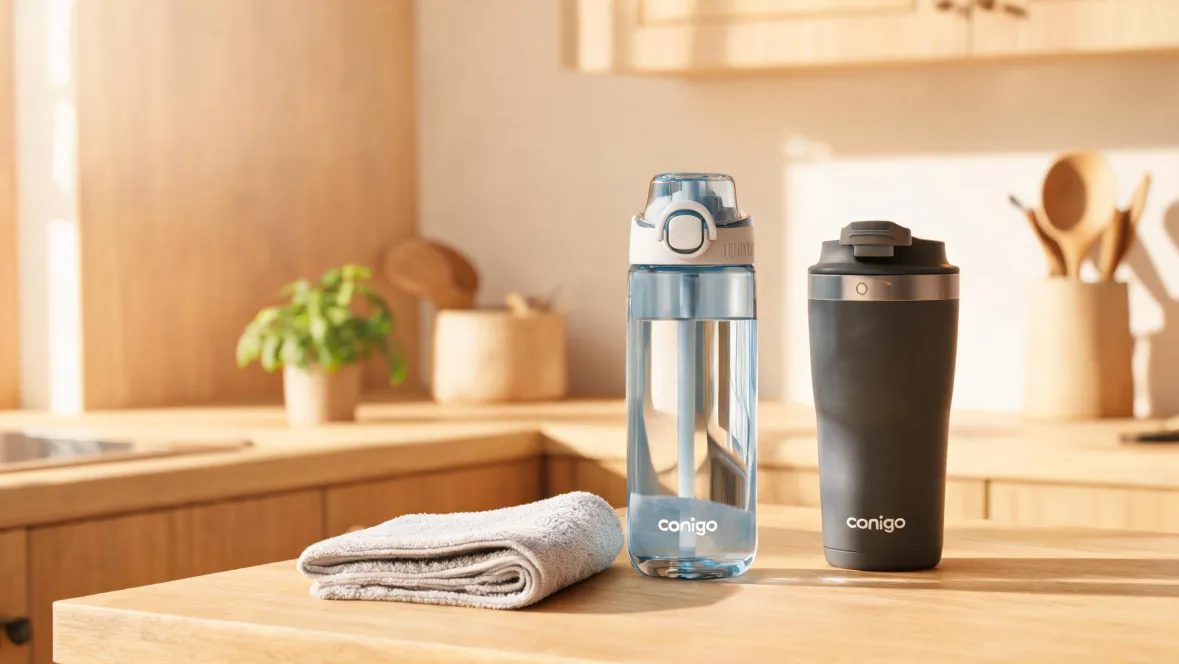
Choosing a water bottle often pits convenience against cleaning. A commuter staring at a shelf sees a sleek stainless steel model with a one-hand button seal beside a traditional twist-cap. The push-button mechanism promises spill-proof drinking on a crowded train, but it hides extra parts that can trap residue; the twist-cap demands two hands and a careful twist. Most people walk away with the flashier option, not realizing they have signed up for a new cleaning routine and a different thermal performance. So which design matches the way you carry and care for it every day, and how do those hidden trade-offs weigh up?
Two Bottles, One Choice: Convenience vs. Cleaning
Choosing a water bottle often pits convenience against cleaning. A commuter staring at a shelf sees a sleek stainless steel model with a one-hand button seal beside a traditional twist-cap. The push-button mechanism promises spill-proof drinking on a crowded train, but it hides extra parts that can trap residue; the twist-cap demands two hands and a careful twist. Most people walk away with the flashier option, not realizing they have signed up for a new cleaning routine and a different thermal performance. So which design matches the way you carry and care for it every day, and how do those hidden trade-offs weigh up?
Contigo is a brand under Newell Brands, a major American conglomerate that also owns Rubbermaid and Bubba. That backing matters: the Autoseal Chill is not an anonymous import with inconsistent quality control, but a product carrying the engineering standards of a large consumer-goods corporation. Newell’s portfolio spans storage, outdoor, and writing products, placing Contigo in a lineage of tested bottles. A buyer can expect that the one-hand seal has been tested, that the steel meets food-grade norms, and that replacement parts are more likely to be available. Still, brand reputation alone does not explain how the valve mechanism behaves after months of use. The brand settles confidence, but performance still depends on design details. Does that pedigree automatically make the Chill superior?
To make the right call, this article compares the Contigo Autoseal Chill against typical stainless steel bottles across four dimensions: material, sealing mechanism, cold retention, and cleaning burden. Each is examined with an engineer’s eye, turning design choices into real-world trade-offs rather than marketing claims. The aim is not to declare a universal winner, but to give you a rule you can apply to your own commute, gym bag, or office desk. By the end, you can look at any stainless bottle and judge whether its seal, insulation, and cleaning effort fit your habits. So which dimension deserves a buyer’s attention first? Start with the material, because a bottle is only as good as the steel it is built from—and is the word 'stainless' alone enough to judge it?
Stainless Steel Grade vs. Structure: What Actually Matters
Stainless steel is not a single material; its performance depends on composition and processing. Research at the 2022 International Conference on Electrical Machines (ICEM) examined ferromagnetic stainless steel used in induction heating, with DOI 10.1109/ICEM51905.2022.9910889, showing that engineers characterise steel by electromagnetic and mechanical profile, not a generic name. For a water bottle, differences in corrosion resistance, thermal conductivity, and durability matter, varying with alloy content. A bottle stamped only 'stainless' could use a low-grade 201 alloy, while 304 or 316 grades offer better food safety. The paper’s focus on electromagnetic properties illustrates the broader point: steel performance is engineered, not assumed. So when a spec sheet omits the grade, should you assume quality?
Real-world testing of food storage containers shows that seal and easy cleaning often matter more than raw material. A 2026 review tested more than 50 containers made from glass, stainless steel, and plastic, and found all materials could work when containers had a durable structure and a properly sealed lid. Testers emphasised that once sealed properly, containers proved completely leakproof, highlighting the gasket’s importance over the shiny exterior. For a stainless bottle, this evidence means the material provides a sturdy shell, but the lid design determines whether your bag stays dry. The same review noted easy cleaning as a key factor, hinting at a hidden weakness of complex lids. Thus, the steel body can be excellent, but is it only half of the equation?
The practical takeaway is to look for food-grade stainless and a solid feel, not just the word 'stainless.' A thin, single-wall, low-grade bottle transfers heat quickly and may pit over time, while a higher-grade steel with double-wall vacuum insulation offers better performance. The Autoseal Chill sits in the premium tier, and its steel body meets that expectation, but the real differentiator is the lid. If the metal is sound, the next question is how the lid keeps liquid inside when tossed into a backpack. This shift in focus is not a dig at the metal; it is simply where the biggest daily difference lies. So what makes the sealing mechanism the next critical factor?
Autoseal vs. Twist-Cap: The Seal That Decides Your Day
Sealing is the most important feature on a bottle you carry in a bag, because a leak turns a convenient accessory into a soggy mess. Twist-cap lids rely on a threaded fit that must be tightened exactly right; a slightly askew cap fails, and so does a worn gasket. Push-button lids like Autoseal use a spring-loaded valve that stays closed until you press the button, removing the user’s role in sealing. That promise sounds excellent, but it adds moving parts that can wear, collect dirt, or fail. An engineer would ask how that valve behaves after thousands of cycles and whether it can be repaired. Given that container testing consistently ranks leakproofness as a top criterion, wouldn't an automatic seal have a clear advantage?
The 2026 container test made the point: when sealed properly, containers proved completely leakproof, meaning the gasket and latch guarantee no spills. Autoseal’s button action provides that leakproof condition without user check, so it outperforms a screw-cap when thrown into a side pocket. Yet the same test flagged easy cleaning as key, and that is exactly where a one-hand valve becomes a double-edged sword. The internal valve, spring, and silicone seal create crevices a simple rinse cannot reach, so you must either accept a shorter cleaning interval or learn to disassemble the lid. When you weigh the leakproof benefit against maintenance effort, the scales tip differently for a hiker than for an office worker. Does the seal then solve one problem only to create another?
Laying the two lid types side by side makes the trade-offs concrete. Autoseal offers true one-hand operation: press, sip, release to seal, ideal for a train or while driving. Twist-cap requires two hands, but gives a direct view of the gasket and can be cleaned with a simple brush, with fewer parts to wear out. For leak resistance, Autoseal is more forgiving because the spring closes the valve by default, whereas a twist-cap only seals if you remember to rotate it fully. For cleaning, Autoseal demands periodic disassembly of the button cap and valve, while a twist-cap can often go in the dishwasher. Long-term durability favours the simpler twist-cap, because a spring can lose tension or a silicone seal can crack, while threads rarely fail. The Autoseal’s convenience thus comes with higher maintenance and replacement costs. So which do you value more: daily ease or simple long-term ownership?
The comparison shows that the sealing mechanism changes your daily routine more than any other component. A commuter who drinks while walking or tosses a bottle into a laptop bag will value the Autoseal’s default-seal behaviour; a desk worker who can twist a cap in two seconds may prefer the simpler lid. The analysis also points to the next dimension: the vacuum layer that keeps drinks cold is affected by how often you open the lid. A bottle that is easy to sip from encourages more frequent opening, and every open releases cold air and allows warmth in. Don't those interactions make the Chill's insulation claim worth scrutinizing?
Cold Retention: Vacuum Layer vs. Single-Wall Metal
Cold retention depends on a vacuum insulation layer, not the metal walls. A single-wall stainless bottle conducts heat rapidly, warming a cold drink in an hour or two; a double-wall vacuum bottle has a void between shells that removes conduction and convection, slowing heat transfer dramatically. The Autoseal Chill uses this double-wall construction, but the exact duration is set by vacuum quality, wall thickness, and lid insulation. In practice, a well-built vacuum bottle in this category can keep iced water refreshing for roughly 18 to 24 hours if the liquid starts nearly frozen and the lid stays shut. That is a general industry expectation, not a laboratory result. So how does that performance differ from a cheap single-wall bottle in daily use?
The name 'Chill' signals a focus on cold drinks, but the lid mechanics matter. Pressing the Autoseal button opens a passage between outside air and the internal cavity; every sip lets cold escape, and once you release, the vacuum layer resumes. So practical cold retention depends heavily on your drinking habit, not just advertised hours. A user who opens the bottle every few minutes on a hot day will see ice melt much faster than someone who takes two sips per hour. Thus the 'Chill' label is not a fixed promise; it is a conditional benefit for moderate sipping. An engineer would say the thermal performance is excellent relative to its class, but what happens when the lid is opened frequently?
Compared to a single-wall metal bottle, the Chill’s vacuum layer is a clear upgrade, but compared to a dedicated vacuum thermos with a narrow mouth, the difference narrows. A traditional thermos minimises air exchange and often uses a thick rubber gasket, both extending cold retention. The Autoseal’s built-in valve, while convenient, creates a larger opening path and a less insulating plastic valve, so in an identical body it may not hold cold as long as a classic thermos. That trade-off is reasonable: you trade a few hours of maximum cold for one-hand drinking without unscrewing a cap. For a 30-minute commute or a 60-minute gym session, the Chill is more than sufficient; for a 12-hour hike, a thermos may edge it out. Is your day built around short, frequent access or long, isolated storage?
The Hidden Cost of Convenience: Cleaning the Autoseal
Cleaning is where the Autoseal’s convenience can backfire, because the mechanism that makes it leakproof also hides residue pockets. The button, spring, and silicone valve touch the liquid every time you drink; if you only rinse, sugars from juice or sports drinks build up inside. This is inherent to any push-button lid, but it means the owner must learn a disassembly routine a twist-cap owner never needs. Ignoring it can lead to musty smells, slower valve action, and even bacterial growth. So when someone picks the Autoseal for convenience, they are also signing up for a deeper cleaning commitment. How hard is that commitment in practice?
Fortunately, most Autoseal lids come apart: unscrew the top cap, pull out the valve and silicone seal, and wash all parts in warm soapy water. The stainless body is easy to clean with a soft sponge and gentle detergent, since food-grade steel resists staining. For stubborn residue, soaking in warm water with a little baking soda works, and a bottle brush reaches the bottom. The key is to dry the parts thoroughly before reassembling, because trapped moisture causes odour. This routine takes about five minutes once a week, a modest cost most owners can accept. Is that effort annoying enough to make you prefer a lid with zero extra parts?
To keep the Autoseal Chill in good condition, avoid bleach and harsh abrasives, which can corrode the metal and degrade the silicone seal. Use a pH-neutral dish soap; if you drink only plain water, a thorough rinse with a valve twist may suffice between deep cleans. For coffee or tea, the vacuum barrier keeps the outside cool, but the interior can stain; a baking soda paste lifts most discoloration. Check the valve area with a flashlight every few weeks, and replace the silicone gasket if it cracks or loses flexibility. This care keeps the bottle performing well for years and is the price of one-hand convenience. So what should your final decision weigh based on those steps?
The Verdict: Match the Bottle to Your Routine
The dilemma that opened this article—a sleek one-hand bottle versus a traditional twist-cap—resolves into a scenario-based choice, not a universal winner. The four dimensions—material, seal, insulation, cleaning—affect habits differently: a commuter values the leakproof one-hand operation; a hiker may prefer a classic thermos for maximum cold retention; a fastidious cleaner may find the valve parts annoying. The Contigo Autoseal Chill is not flawed; it is focused, built for people who want a bottle that works automatically on the move. Evidence from brand background, material science, and container testing supports that positioning, provided the owner accepts the maintenance routine and understands its limits. But is that trade-off acceptable to you?
Here is a reusable rule: choose the Autoseal Chill if your routine involves carrying a bottle in a bag, drinking one-handed while moving, or sipping frequently without unscrewing a cap. Choose a simple twist-cap stainless bottle if your priority is effortless deep cleaning, a lid with fewer wear points, or maximum cold retention over many hours without opening. If you already own the Autoseal Chill, keep it when you appreciate the button action and accept five minutes weekly for valve cleaning; if that chore has become a persistent annoyance, switching to a simpler lid is a rational move, not a defeat. So why does this rule work regardless of brand?
The verdict is conditional but clear: for most urban commuters and gym-goers, the Contigo Autoseal Chill is a worthwhile purchase, because its sealing mechanism removes the biggest failure point of a travel bottle, and its vacuum insulation reliably handles the typical 2 to 4 hours of cold storage a daily routine demands. That judgement changes for someone who needs 12-hour cold storage or dislikes disassembling a lid; for them, a conventional vacuum thermos is a better fit. The Chill earns its position not by being the best in any single metric, but by balancing convenience and insulation the way most people actually use a bottle. That is why it deserves a place in your bag—if you treat it as a tool requiring care, not a set-and-forget container.
For daily commuters and gym-goers, the Contigo Autoseal Chill is the smarter pick; for 12-hour cold storage, a conventional thermos remains the better choice.

Ingrid Falk
Ingrid Falk is an outdoor living products analyst specializing in fences, pergolas, gazebos, canopies, greenhouses, shade sails, patio sets, outdoor sofas, and weatherproof cushions. She uses ISO 4892-2 and ASTM G154 weathering methods while comparing UV color change, coating adhesion, corrosion resistance, frame load, joint stability, water shedding, and dimensional movement. Her work helps garden retailers, project buyers, and hospitality operators select structures and furniture suited to wind exposure, climate, installation method, maintenance, and expected occupancy.