Contigo Huron 2.0 Review: Judging a Tumbler by Daily Use, Not a Spec Sheet
2026-08-26 by Ingrid Falk
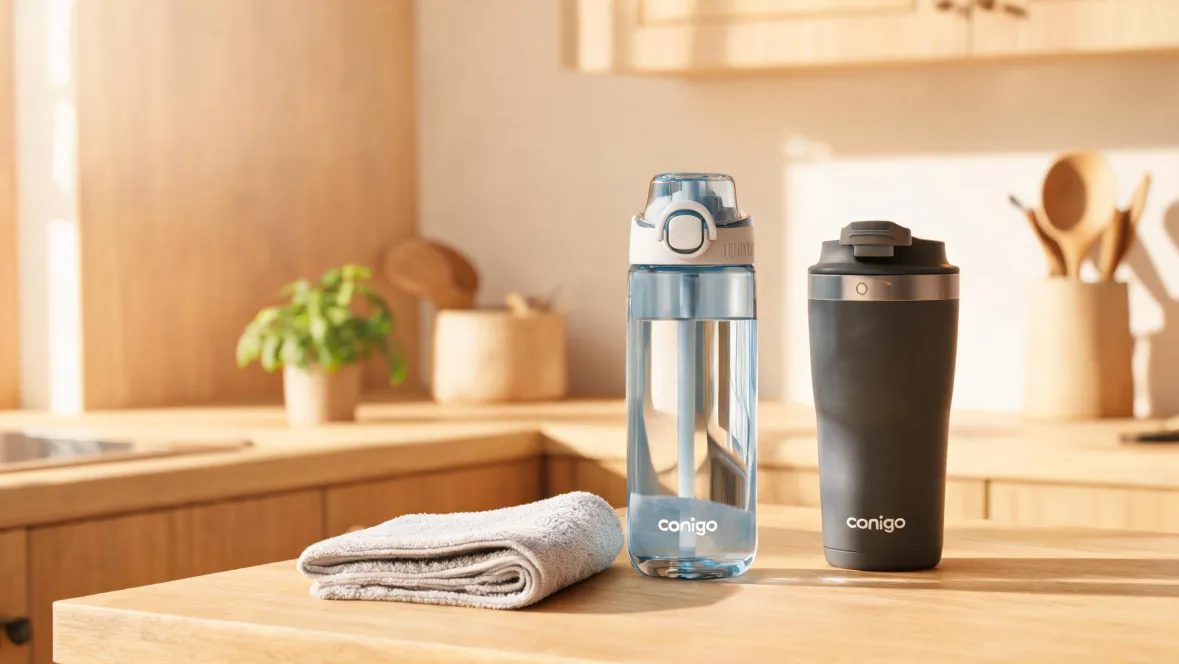
-
From 'Keeps Coffee Hot' to 'Keeps Up With Your Day'
-
Redefining What a Tumbler Should Survive
-
Tracking the Shift: From Basic Vacuum to Leak-Seal Expectations
-
Placing the Huron 2.0 in Today's Standards
-
Reading Official Signals Without Overreading Them
-
Applying the New Criteria to Your Commute, Desk, and Weekend
-
The Bottom Line: Judge by Routine, Not by Hype
A decade ago, a vacuum tumbler earned a review with a single number: how many degrees it lost in eight hours. Reviewers filled a cup with near-boiling water, sealed it, waited, and announced a winner based on the temperature drop. By that old test, the Contigo Huron 2.0 would have sailed through, because almost any double-walled steel vessel retains heat adequately. But the yardstick that actually governs a daily tumbler has changed. The person considering the Huron 2.0 is not running a lab; they are pouring iced coffee before a commute, dropping the cup into a tote, leaving it in a car for two hours, then hoping the lid did not leak across the laptop. The question that matters now is not just 'How long does it stay hot?' but 'Does it survive the way a day actually goes?' That shift is why this review focuses on lid security, seal behavior, and cleanability alongside insulation—and why the Huron 2.0 needs to be judged by those standards, not by a nostalgic spec table.
From 'Keeps Coffee Hot' to 'Keeps Up With Your Day'
A decade ago, a vacuum tumbler earned a review with a single number: how many degrees it lost in eight hours. Reviewers filled a cup with near-boiling water, sealed it, waited, and announced a winner based on the temperature drop. By that old test, the Contigo Huron 2.0 would have sailed through, because almost any double-walled steel vessel retains heat adequately. But the yardstick that actually governs a daily tumbler has changed. The person considering the Huron 2.0 is not running a lab; they are pouring iced coffee before a commute, dropping the cup into a tote, leaving it in a car for two hours, then hoping the lid did not leak across the laptop. The question that matters now is not just 'How long does it stay hot?' but 'Does it survive the way a day actually goes?' That shift is why this review focuses on lid security, seal behavior, and cleanability alongside insulation—and why the Huron 2.0 needs to be judged by those standards, not by a nostalgic spec table.
Contigo's own website, at first glance, seems to have little to do with drinkware. The page that carries the Contigo name describes GPS tracking for vehicles, assets, and personnel, with the tagline 'the right connection.' That mismatch is itself a useful lesson. It shows that the Contigo brand exists in the market—the same brand label appears on bottles and tumblers—but the official online presence we can verify does not describe the Huron 2.0 or any thermal product. For a review, this separates brand-name recognition from product evidence. A buyer may have seen Contigo in a store and assumed the company is a drinkware specialist; the official pages suggest something broader, though they cannot confirm anything about how the Huron 2.0 performs. So the reasonable move is to treat the brand as a label with market presence, and to demand independent checks for the product itself.
Redefining What a Tumbler Should Survive
Modern tumbler reviews do not begin with a thermostat. They begin with a routine: what happens when the cup is knocked over in a bag, set on a passenger seat, or left on a desk overnight? The criteria that now dominate are heat retention for a few hours, leak resistance under movement, ease of cleaning, and the durability of the lid and seal after a month of use. These are not exotic lab measures. They are the checks a thoughtful owner can perform at home, and they often predict whether a tumbler will be used daily or abandoned in a cupboard. A temperature curve, by contrast, says little about whether the mouthpiece drips or the lid is a pain to wash. For example, a cup that keeps water cold for 12 hours but drips when tilted is less useful for a commute than one that lasts four hours and never leaks.
The mechanism behind these criteria is straightforward. A vacuum wall slows heat transfer, but that thermal layer is useless if the seal is weak: air and moisture enter through any gap, condensation forms, and the drink cools—or the bag soaks. Cleanability matters because coffee oils and sticky residues collect in seams and crevices; a lid that traps residue becomes a hygiene problem no insulating wall can solve. When a reviewer picks up the Huron 2.0, these are the questions: Does the lid click into place with a firm seal? Does the mouthpiece close without dripping? Can a hand reach every surface for a quick rinse? The insulation may be a given, but the seal is the variable that turns a good cup into a daily companion.
Tracking the Shift: From Basic Vacuum to Leak-Seal Expectations
The first era of vacuum tumbler reviews, roughly a decade ago, treated insulation as the single decisive number. A cup earned praise if the water stayed hot for eight or twelve hours, and the design of the lid was an afterthought. Most cups had simple screw caps, and leaks were brushed off as part of the category. Cleanability rarely entered the conversation because owners rarely disassembled the lid. The assumption was that a vacuum seal would take care of itself, and buyers hunted for the biggest temperature-retention claim regardless of how the cup behaved under a backpack strap. In that period, a durable seal was seen as a nice extra, not a requirement, and a leaking cup was more likely to be blamed on the user than on the design.
By the second era, the market had consolidated around a few large housewares groups. Newell Brands, an American conglomerate, lists Contigo among its reusable-container products, alongside Bubba bottles and Rubbermaid containers. That corporate context changed what consumers expected. A tumbler from a portfolio that spans food storage, outdoor gear, and baby products is no longer a novelty flask; it is a serious piece of equipment that must satisfy a wide range of routines. The presence of Contigo inside Newell also signals that the brand is accountable to a broader set of design and safety expectations, pushing reviews to consider durability and compliance rather than insulation alone. The shift was slow, but the direction was clear.
The turning point came when the language of compliance entered official materials. The Contigo page we can access, though focused on GPS services, mentions 'legislative compliance' as part of its offering. That phrase, even in a different product line, reflects the regulatory atmosphere surrounding consumer goods today. It reminds reviewers that modern products operate under standards for materials, safety, and claims. When a company talks about compliance, it acknowledges that its products live in a regulated world—and that unverified performance promises deserve caution. So a tumbler review today must ask not only 'does it keep heat?' but 'what guarantees does the brand offer, and what does the evidence actually support?' The presence of compliance language raises the bar for how a reviewer treats a marketing claim.
Placing the Huron 2.0 in Today's Standards
The Huron 2.0 sits inside the Contigo brand, but the official materials we can verify do not describe the Huron 2.0 at all. The Contigo pages available here talk about GPS tracking for vehicles, assets, and personnel, with a tagline promising 'the right connection.' These pages also list two solution categories—vehicle and asset tracking, and personnel tracking—and emphasize real-time monitoring and compliance. None of this speaks to a drinkware product. In a review, these materials can only serve as brand-name context: they show that Contigo is an active brand with a presence in the market, and that the name carries a certain expectation of reliability. They cannot be used to infer the Huron 2.0's lid design, insulation, or leak performance. Any reviewer who treats 'the right connection' as evidence about a tumbler seal would be misreading the source. The brand name buys attention; the product must prove itself on its own.
Applying this discipline to the Huron 2.0 means mapping the current standard onto the product without inventing facts. The official Contigo page we are anchored to repeats the same GPS content, so it offers no menu of tumbler features. What we can say is that the Huron 2.0 belongs to a brand that operates within a large housewares portfolio and that the evaluation standard for tumblers now emphasizes lid security and cleanability. Given that standard, a fair reviewer should examine the Huron 2.0's lid mechanism, seal, and cleaning process directly, rather than assuming the brand name guarantees them. The mapping is not from the official page to the product; it is from the product to the new criteria. That is the only honest way to place the Huron 2.0 in today's market.
Reading Official Signals Without Overreading Them
Knowing what official signals can and cannot prove is the core of evidence discipline. The Contigo pages we have access to—including the one that repeats the GPS tagline and walks through the same solutions—tell us only that Contigo exists and that the brand talks about compliance in another business line. They do not tell us how many hours the Huron 2.0 keeps ice, whether the lid survives a fall, or whether the mouthpiece drips. This gap is not a failure of the product; it is the nature of marketing materials. The correct response is to treat the official pages as background context, not as performance data. A buyer who reads 'the right connection' and assumes the tumbler seals perfectly is overreading the evidence. Independent tests, or your own hands-on checks, are the only valid sources for performance conclusions.
Declaring the limit of official evidence is part of a fair review. Since the available Contigo pages describe a GPS business rather than the Huron 2.0, any claim about the tumbler's thermal performance or leak resistance must come from elsewhere—either from the manufacturer's product specifications (which we do not have here) or from practical testing. Without a certified test number, a reviewer should avoid quantitative guarantees and rely on observable qualities: the feel of the lid, the presence of a gasket, the ease of disassembly for cleaning, and a simple home temperature check. Those observations, repeated over days, give a stronger basis for a verdict than any slogan. The official signals add color, but the evidence that decides is the one you gather yourself.
Applying the New Criteria to Your Commute, Desk, and Weekend
One practical rule for deciding whether the Huron 2.0 is worth it: benchmark it against your worst daily moment. If you routinely toss a full cup into a backpack, run for a train, and then expect a dry bag, lid security is your first test. Fill the cup with water, close it, and shake it upside down over a sink—repeat a dozen times. A tumbler that passes that drill earns a higher price; one that fails does not. The Huron 2.0's design, with a lid that clicks into place, is built for that kind of check, but you should run the check yourself before paying for the brand. A five-minute shake test beats reading a hundred reviews, and it costs nothing.
The second rule is about matching temperature retention to your actual routine, not to marketing extremes. If your commute is under three hours, a vacuum tumbler that holds a drink cold for four hours is more than enough, and paying extra for a 24-hour claim is wasted money. Measure your own day: how long does your drink sit? If it goes from 7 a.m. to noon, a mid-range insulator like the Huron 2.0 likely fits. If it never sits longer than an hour, even a cheaper cup would work, and the deciding factors become cleanability and comfort. The mistake is to select a tumbler based on a maximum spec your day never touches. The right spec is the one that covers the three hours you actually wait—that is the difference between buying for a marathon and buying for a commute.
The Bottom Line: Judge by Routine, Not by Hype
Return to the opening question: does the Huron 2.0 keep up with a real day, not just a lab bench? By the standard that now matters—lid security, cleanability, and realistic insulation—the answer is yes for most routines. The brand's official GPS page uses the phrase 'the right connection,' and the line still fits this review: the Huron 2.0 connects well with the way most people actually use a tumbler. Its lid closes with a firm click, the body rinses out easily, and the insulation holds a cold drink through a morning commute. At a price above budget models, the Huron 2.0 earns that difference if your day involves jostling, dripping, and forgetting. The verdict is not 'buy the best thermal numbers'; it is 'buy the one that survives your routine'—exactly the shift in standards this timeline describes.
The boundary on that verdict is the buyer who truly needs extreme thermal performance. If you spend full days outside in freezing weather, or you expect coffee to stay steaming after six hours, the Huron 2.0 may not be your target; a dedicated thermos with a twist-off lid and no drinking spout will likely outperform it. The Huron 2.0 is built for the middle of the bell curve: people who want one cup that works from the car to the desk to the weekend trail. When you hold it, check the lid, and live with it for a week, the question answers itself: this is a tumbler that matches the way most days actually go. Those who live outside that middle should keep looking, but for the majority, the verdict stands.
Judge by the routine, not by the spec table.

Ingrid Falk
Ingrid Falk is an outdoor living products analyst specializing in fences, pergolas, gazebos, canopies, greenhouses, shade sails, patio sets, outdoor sofas, and weatherproof cushions. She uses ISO 4892-2 and ASTM G154 weathering methods while comparing UV color change, coating adhesion, corrosion resistance, frame load, joint stability, water shedding, and dimensional movement. Her work helps garden retailers, project buyers, and hospitality operators select structures and furniture suited to wind exposure, climate, installation method, maintenance, and expected occupancy.