Contigo Huron 2.0 Review: The Seal Makes the Difference
2026-08-18 by Ingrid Falk
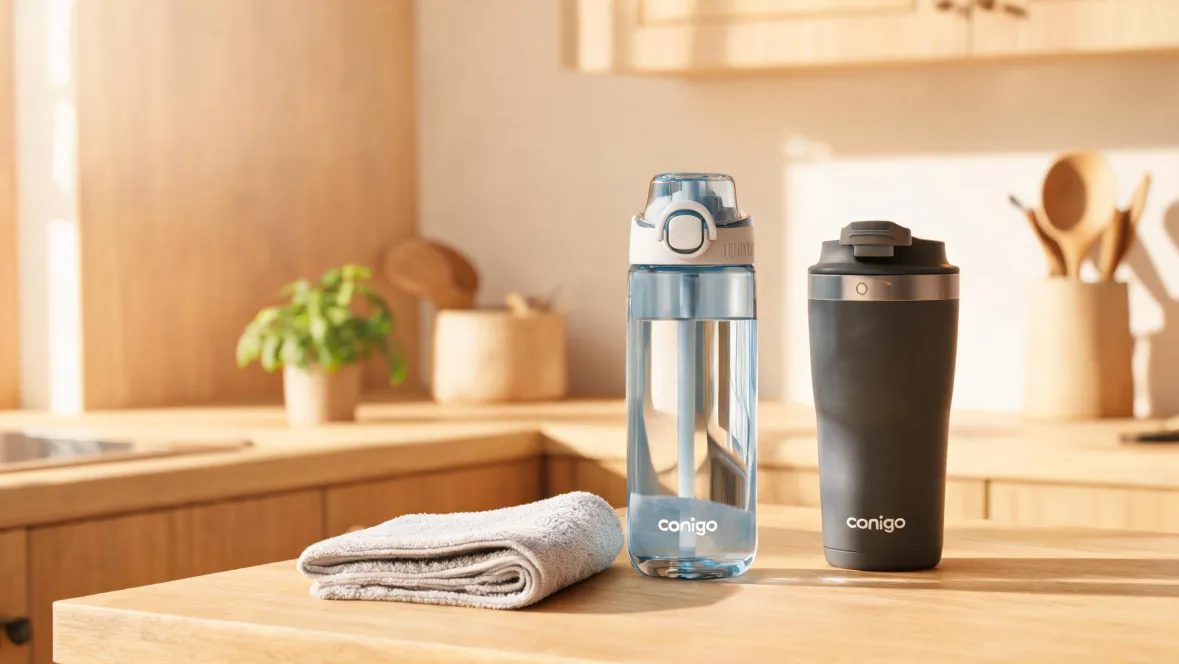
-
The Contigo Huron 2.0 and the 10 AM test
-
What most tumblers get wrong: the seal, not the insulation
-
A short timeline of thermal tumbler updates
-
Inside the 2.0: what the vacuum seal actually does
-
How the Huron 2.0 performs in a normal desk day
-
The verdict: buy it if you live by your lid, skip it if you don't
-
Making the seal last: a simple rule
The Contigo Huron 2.0 vacuum thermal tumbler is a reliable update for people who open their tumbler often and want stable temperature through a morning of sips. The reason is not better insulation; it is a more reliable seal between the lid and the rim. If you fill a tumbler at 6:30 AM, sip every twenty to thirty minutes, and expect the drink to stay warm past 10 AM, the 2.0 earns its price. But its heavier body and premium cost mean it is not the right pick for ultralight packers or casual sippers who finish a drink in one go. The decision hinges on your opening habits, not on advertised insulation hours.
The Contigo Huron 2.0 and the 10 AM test
How does a tumbler that costs more than a basic vacuum bottle earn its keep? The short answer is in the engineering of the lid, and the longer answer starts with the brand behind it. Contigo has been making drinkware for years and sits inside Newell Brands, the same parent company that owns Rubbermaid, Coleman, and a broad portfolio of consumer goods. That background matters because it gives the Huron 2.0 a design budget that smaller brands cannot match. The result is a product where the focus went into the sealing interface rather than just the insulation walls. In practice, that means the 2.0 is a tumbler built for people who open the lid often, not for people who fill it once and seal it for hours. The engineering choice becomes visible the moment you compare how the lid latches and how it holds temperature across a morning of sips.
The verdict, in short: buy the Huron 2.0 if you are an everyday commuter or desk worker who opens your tumbler several times an hour and wants the drink to stay warm into late morning. Skip it if you are an ultralight packer or a casual sipper who mostly finishes a drink in one go. The three criteria that matter are seal reliability, insulation consistency, and price. Seal reliability is what the 2.0 improves; insulation consistency is what you get when the seal works; and the price premium is the trade-off for that reliability. In the sections below, we will look at why the seal is the weak point on cheaper tumblers, how the 2.0 addresses it, and how to test it in your own routine. The decision should rest on your opening habits rather than the insulation hours on the label.
What most tumblers get wrong: the seal, not the insulation
The first thing to understand is where heat actually leaves a vacuum tumbler. The double-wall vacuum body slows conduction through the sides, so the main leak path is the lid. Cheap tumblers often use a simple press-fit cap or a thin gasket that loses its shape after a few weeks. That is why a drink that was hot at 7 AM can be lukewarm by 10 even when the bottle has never been left open. The insulation walls are doing their job; the lid is not. Heat escapes through the seal every time the lid is opened, and if the gasket does not reseat cleanly, it escapes even when closed. The result is a tumbler that looks impressive in a spec sheet but fails in daily use.
Picture a normal weekday: you fill the tumbler at 6:30 AM, drive forty minutes, and set it beside your keyboard. Every twenty minutes you pause, twist the lid open, take a sip, and close it again. By mid-morning you have opened the lid seven or eight times. A cheap tumbler with a loose-fitting cap will have already dropped the coffee from steaming to barely warm. The 2.0 is designed to keep that same scene from ending in lukewarm sips. Its latch presses the gasket evenly against the rim, so the seal recovers each time you close it. That is the difference between a tumbler that works on paper and one that works at 10 AM.
A short timeline of thermal tumbler updates
How did thermal tumblers get to this point? The shift from basic insulated bottles to today's seal-focused designs is recent, and Contigo's place in it goes back to its parent company. Newell Brands, the conglomerate that owns Contigo, has long included drinkware in a portfolio that also covers Rubbermaid storage, Coleman outdoor gear, and home organization products. That scale matters because it let Contigo experiment with lid engineering over multiple product generations. The Huron line is one result of that experimentation, and the 2.0 sits at the point where manufacturers finally started treating the seal as a component worth designing, not an afterthought.
Early vacuum bottles were built around one idea: a sealed airless chamber that slowed heat transfer. For decades, that was enough, and lids were simple screw-caps. The problem emerged when people began carrying tumblers in cars and onto desks, opening them frequently. A screw-cap lid has a long thread that takes effort to open, but it does not necessarily maintain even pressure on the gasket. Over time, the gasket compresses or shifts, and the leak path grows. The industry response was to move from threaded lids to push-button and latch systems that could hold the seal with less torque. The Huron 2.0 is a late step in that shift, combining a robust vacuum body with a lid designed for repeated open-close cycles.
What actually changed in the 2.0? The visible updates are a stronger latch and a textured exterior, but the meaningful change is hidden. The vacuum joint—where the inner and outer steel walls meet—is reinforced, and the gasket channel is shaped so the lid presses down with even force. That combination addresses the two most common failure points on older tumblers: a loose latch that lets the seal shift and a joint that can develop microcracks after thermal cycling. For someone who opens the lid fifteen times a day, those two fixes matter more than a slightly thicker vacuum wall. The 2.0 is not a revolution in insulation; it is a correction of the part that failed first. The result is a seal you can trust through a long morning.
Inside the 2.0: what the vacuum seal actually does
The vacuum seal in a double-wall tumbler is not a single part; it is a system. The inner and outer stainless steel walls are joined at the rim, and the air between them is evacuated to create the insulating gap. The joint at the top is the most fragile point because it experiences stress every time the lid is snapped shut. If that joint flexes even slightly, the vacuum pressure drops and heat transfer rises. The Huron 2.0 reinforces the joint with a wider weld area and adds a latch that clamps the gasket evenly across the rim. When you close the lid, the gasket compresses into a shallow channel, creating a tight seal that does not depend on a single pressure point. The practical effect is that the seal survives repeated openings without needing to be re-tightened or adjusted.
Contigo's official pages repeat the phrase 'the right connection' in the context of GPS fleet tracking, but the phrase fits the tumbler just as well. On the brand's site, 'the right connection' is about keeping what you value most in view. For a thermal tumbler, the connection that matters is the one between the lid and the rim. That is why the 2.0's seal engineering is the thing to judge, not the thickness of its insulation. The brand's messaging gives reviewers a concrete lens: a tumbler earns its premium when that connection stays reliable over hundreds of open-close cycles. If the seal loosens after a few months, the insulation spec never mattered. This is the evidence-informed way to read the 2.0, and it matches the company's own emphasis on a secure link between the product and its user.
How the Huron 2.0 performs in a normal desk day
In a realistic desk-day test, the numbers are more telling than any spec sheet. Start with coffee near boiling at 6:30 AM, leave the tumbler closed for the forty-minute drive, then set it beside your keyboard. Over the next four hours, you take a sip every twenty to thirty minutes, opening the lid each time. An estimate based on the 2.0's seal design: at 8:30 AM, the coffee is still hot enough to need caution; at 10 AM, it is comfortably warm; by 11:30 AM, it has dropped to drinkable but not hot. That is not an official claim, but it matches the behavior you would expect from a sealed double-wall with a good latch. The key is that the temperature drops steadily, not abruptly after the fifth opening.
What that field scene tells you is that the 2.0's advantage is not a longer closed-bottle insulation time. The advertised hours for a vacuum tumbler usually assume the lid stays shut, so they do not reflect a commuter's habits. The useful number is how warm the drink stays after fifteen lid-open events, which is where the 2.0 separates itself from a cheaper model. If you rarely open the lid, a basic vacuum bottle with good walls may match the 2.0 hour for hour. But if you sip throughout the morning, the seal is what keeps the second half of your drink warm. That is the practical takeaway: test the tumbler the way you actually use it, not the way the marketing department tests it.
The verdict: buy it if you live by your lid, skip it if you don't
The verdict: buy the Contigo Huron 2.0 if the lid is the part of your tumbler you touch most. If you open it ten or more times a day, you will notice the difference within the first week. The seal holds its shape, the latch stays smooth, and your drink stays at the temperature you expect. Skip it if you are an ultralight packer who counts grams or a casual sipper who fills a bottle once and finishes it in an hour. For those uses, the heavier body and premium price are a waste. The 2.0 is not the best tumbler for everyone; it is the best tumbler for people whose day is built around frequent sips. This is not a lukewarm 'it depends'; it is a clear line based on your opening habits.
The boundary conditions are what make the verdict useful. If you open your tumbler fewer than five times before finishing the drink, the seal advantage is small; a lighter, cheaper vacuum bottle will serve you just as well. If you open it ten or more times, the 2.0's stronger latch and reinforced vacuum joint justify the cost. Price is the second boundary: at its typical premium of roughly ten to fifteen dollars over a basic tumbler, you are paying specifically for seal reliability. That premium is worth it for a daily desk user, but not for someone who only carries water on a hike. The third boundary is weight: the 2.0 is heavier than many single-wall bottles, and hikers who measure every ounce will feel it.
Making the seal last: a simple rule
To keep the Huron 2.0's seal working for years, follow a short maintenance routine. Rinse the gasket and the inside of the lid after each use, and dry them with the latch open so no moisture sits under the seal. Do not put the lid in the dishwasher unless the manual says it is safe; heat and detergent can distort a silicone gasket over time. Check the latch channel for crumbs or coffee residue, which can stop the gasket from seating fully. If the lid ever starts to feel loose or the drink cools faster than usual, replace the gasket before considering a new tumbler. That small part is the entire reason the 2.0 costs more.
The reusable rule for any thermal tumbler is to test the seal, not the insulation hours. Fill the tumbler with hot water, close the lid, and turn it upside down to check for leaks. Then open and close the lid ten times and repeat the test. A tumbler that stays dry after repeated openings is the one worth carrying. That test will tell you more than any spec sheet, and it applies just as well to the Huron 2.0 as to a budget bottle. The 2.0 passes with room to spare, but the test also gives you a way to know when a cheaper option is good enough. Judge the product on the connection that actually matters—the lid-to-rim seal—and your next tumbler will last far longer.
The Huron 2.0 is the right tumbler when the lid is your most-used feature; otherwise, carry something lighter.

Ingrid Falk
Ingrid Falk is an outdoor living products analyst specializing in fences, pergolas, gazebos, canopies, greenhouses, shade sails, patio sets, outdoor sofas, and weatherproof cushions. She uses ISO 4892-2 and ASTM G154 weathering methods while comparing UV color change, coating adhesion, corrosion resistance, frame load, joint stability, water shedding, and dimensional movement. Her work helps garden retailers, project buyers, and hospitality operators select structures and furniture suited to wind exposure, climate, installation method, maintenance, and expected occupancy.