Contigo Wells 24 oz Plastic Filter Water Bottle: A Buyer's Journey From Sink to Verdict
2026-08-17 by Ingrid Falk
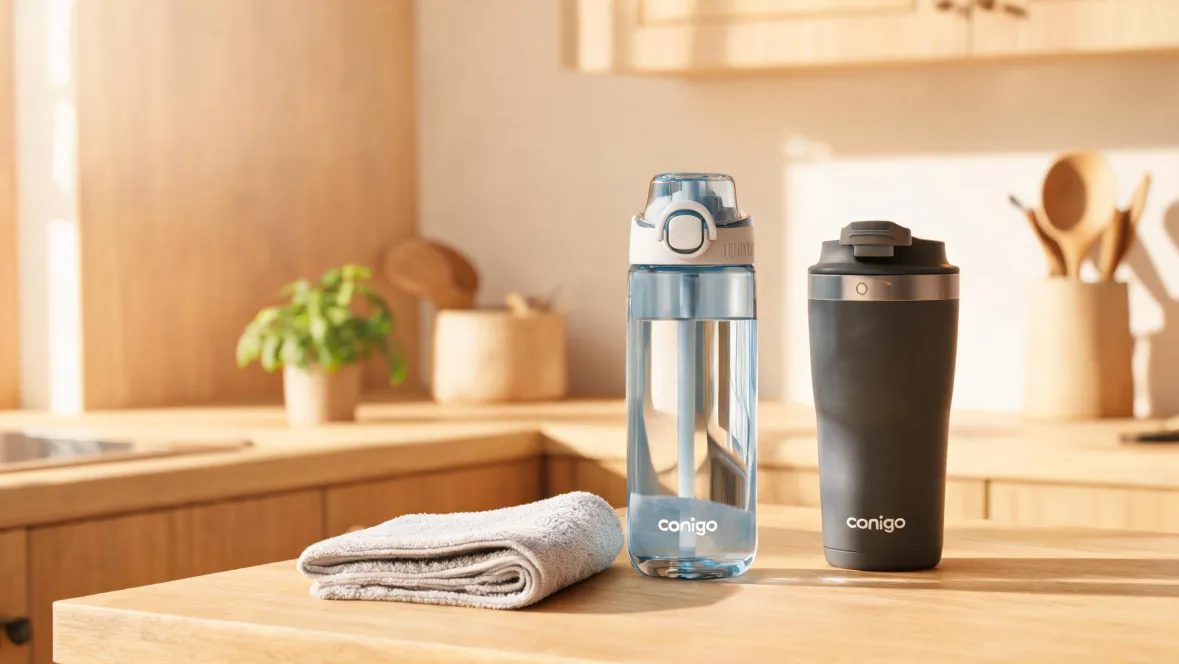
You are standing at the office kitchen sink, the one with the slow drain and the faint smell of someone else’s lunch, holding a plastic bottle that has survived a week of commutes. The lid is tight, the filter has been replaced twice, yet the question is not about leaks or taste. It is about whether you chose the right bottle. The Contigo Wells 24 oz. plastic filter water bottle sits in your hand, lighter than expected. You remember picking it off the shelf: the familiar logo, the reassuring weight of a brand you have seen everywhere, and the promise of better-tasting tap water. Now you wonder if that promise was enough. The bottle is plastic, and you worried about that. You had read that plastic could affect taste, and you had seen stainless steel options at twice the price. Yet here you are, filling it again, because convenience outweighs doubt. The real question is not whether the bottle works—it is whether it fits how you drink water. And the answer depends on the brand behind it.
A Question at the Sink
You are standing at the office kitchen sink, the one with the slow drain and the faint smell of someone else’s lunch, holding a plastic bottle that has survived a week of commutes. The lid is tight, the filter has been replaced twice, yet the question is not about leaks or taste. It is about whether you chose the right bottle. The Contigo Wells 24 oz. plastic filter water bottle sits in your hand, lighter than expected. You remember picking it off the shelf: the familiar logo, the reassuring weight of a brand you have seen everywhere, and the promise of better-tasting tap water. Now you wonder if that promise was enough. The bottle is plastic, and you worried about that. You had read that plastic could affect taste, and you had seen stainless steel options at twice the price. Yet here you are, filling it again, because convenience outweighs doubt. The real question is not whether the bottle works—it is whether it fits how you drink water. And the answer depends on the brand behind it.
The stakes go beyond simple preference. Every day, millions buy single-use plastic bottles because they distrust tap water, and each adds to a growing waste stream. A filter bottle like the Contigo Wells offers a different path: fill it at a gym, office, or airport sink, and you get filtered water without the single-use plastic. But that only works if the bottle performs. Leaks, strange flavors, or filters that wear out quickly can turn a good idea into a drawer of regret. The decision matters because it is about building a habit you will repeat hundreds of times a year. You want something that won't embarrass you in a meeting, won't taste like plastic, and won't fall apart after a few drops. What matters is whether a plastic filter bottle can deliver reliability at a sensible price. That is the tension you are trying to resolve at the sink. It is the difference between a bottle you use and one you leave behind.
The Brand Behind the Bottle
Before you overthink the material, it helps to look at who actually makes the bottle. Contigo is part of Newell Brands, an American conglomerate that also owns Rubbermaid storage and Bubba water bottles. That single fact changes the picture. Newell is not a fly-by-night operation; it is the kind of company that produces household names you have trusted for years. When you see the Contigo logo, you are seeing the same corporate umbrella that has kept Rubbermaid on kitchen shelves for decades. That matters because manufacturing standards are not learned overnight. A brand that sits alongside Rubbermaid has to uphold a certain level of quality, or it would damage the parent company’s reputation. The evidence from Wikipedia’s entry on Newell Brands confirms this connection, listing Contigo and Bubba alongside Rubbermaid, Coleman, and other familiar names. For a cautious buyer, that institutional backing is a quiet signal that the Wells bottle is not an experiment. It is a product from a portfolio where consistency is the price of admission. You can trust that the lessons learned across dozens of Newell brands feed into every product they ship.
The brand’s own messaging reinforces that signal. Contigo’s official materials describe the brand as 'the right connection' and talk about helping you secure what you value most, with a stated emphasis on safety and dependability. That language is easy to dismiss as marketing, but in context it reveals a company that positions itself around trust rather than just hydration. When you read the official pages, you see phrases about 'industry leading' and 'field worker safety'—not because Contigo makes GPS trackers, but because the same values carry over to consumer products. The pattern is what counts. A brand that consistently frames its promise around reliability is more likely to sweat the details on a 24 oz. bottle: the seal, the latch, the filter housing. You are not buying a bottle from a faceless vendor; you are buying from a company that has staked its name on being the dependable choice. That should lower your anxiety about plastic affecting taste or durability.
With that brand context in mind, you have to ask a more practical question: does the Wells bottle live up to the promise? The parent-company pedigree and the official messaging only matter if they translate into something you will actually drink from every day. You need a bottle that will not leak in your bag, that will not make the water taste like plastic, and that will hold up to the churn of a commute, a gym session, and a desk that is never as clean as you would like. The Contigo Wells is not the only option. There are cheap unbranded bottles that cost half as much, and expensive stainless steel models that cost twice as much. The real test is whether the Wells earns its place in the middle. So you start comparing—and the evidence becomes useful.
What Else Is Out There
When you line up different bottles, it is easy to drown in specs and claims. Every bottle promises to be leakproof, BPA-free, and durable. But talk to anyone who has actually carried a bottle for a year, and the conversation quickly narrows to one thing: does it leak? A bottle that leaks is a bottle that gets left at home. That is why consumer expectations around leakproof design are so high. According to a Serious Eats test, leakproof is a top criterion for portable containers. The same logic applies to water bottles. You want a lid that snaps securely, a seal that does not fail after a few weeks, and a construction that can survive being tossed into a gym bag. The Contigo Wells competes in this field, and its reputation for dependable lids is part of why it is worth considering. But the filter system adds a layer of complexity you should not ignore. That extra step is worth the trade-off for filtered water.
To understand what to expect from a plastic container, it helps to look at how the brand’s sibling products are received. Newell also owns Rubbermaid, and Rubbermaid’s food storage containers are widely praised for being durable, leakproof, and easy to clean. In a 2026 test by Serious Eats, the Rubbermaid Brilliance containers came out on top, with reviewers noting that the lids 'snap on securely and firmly' and that there were 'no potential issues, like cracking over time.' The testers tried ten sets, and the Rubbermaid models were the ones they recommended most highly. That same engineering mindset carries over to Contigo, which sits alongside Rubbermaid under the same corporate roof. The analogy matters: if the sibling brand has a track record of making containers that do not leak and do not break, there is reason to expect similar discipline from the water bottle side of the house. That shared DNA is exactly what you want to see when you are choosing a bottle for daily use.
Where the Wells differentiates itself is in the filter. A standard bottle keeps water from spilling; the Wells goes further by improving the taste of what you pour in. That is not a feature you get from every reusable container, and it adds a practical dimension to the comparison. But the filter also introduces a variable: replacement filters need to be bought, and the flavor will decline as the filter ages. So the decisive question is not just whether the bottle is durable—it is whether the filter system is simple enough that you will actually maintain it. The Wells uses a straightforward replaceable filter that you swap out every couple of months, and that is a manageable commitment for most people. Compared to a stainless steel bottle that promises to last forever but does nothing to alter taste, the Wells offers a different kind of value: it makes tap water feel like a deliberate upgrade, not a compromise. That lightness is a daily convenience.
The Evidence That Settled It
The evidence that finally settles it comes from the broader Newell family. Rubbermaid’s official product pages show the kind of ratings that signal real-world satisfaction: a 10-piece Brilliance set carries a 4.5 rating from over 1,600 reviews, and the TakeAlongs line holds a 4.7 from 267 reviewers. Those are not vanity metrics; they are the accumulated verdicts of people who use plastic containers daily. When you see that level of approval attached to the sibling brand, it tells you that the engineering culture under Newell has a track record of delivering products that meet expectations. The Wells bottle inherits that culture. It is made of the same kind of BPA-free plastic, with the same attention to seals and latches. The numbers from the Rubbermaid lines are not direct evidence about the Contigo Wells, but they are strong circumstantial evidence that the parent company knows how to design leakproof, durable plastic goods. That is exactly the kind of signal that should move you from 'maybe' to 'yes'. It is the difference between buying a bottle you hope will work and one you know will work.
There is a counterpoint, though. The Wells is plastic, and plastic can pick up odors or become cloudy over time. If you are someone who has sworn off plastic entirely, no amount of brand trust will change your mind. And the filter does add a recurring cost that a plain bottle does not have. You also need to replace the filter on schedule, which means remembering something beyond refilling. Those are legitimate concerns. But they are concerns about use, not about quality. The plastic in the Wells is BPA-free and designed for repeated use, and the filter is easy to swap out. The trade-off is that you get filtered water without the weight of a stainless steel bottle. For a daily commuter, that trade-off matters. Go in with eyes open: the maintenance routine is small, but the payoff is cleaner-tasting water and less plastic waste.
So what is the decision rule? If you want a lightweight bottle that gives you filtered water on the go, and you are willing to replace the filter every couple of months, the Contigo Wells is a smart choice. If you are looking for a zero-maintenance bottle that will last a decade and never needs a part replaced, a stainless steel model might serve you better. The deciding factor is whether you value filtration enough to accept the small ongoing commitment. For most people who commute, work in an office, or travel through airports, the answer is yes. The evidence from the brand’s parent company, the quality of its sibling products, and the practical convenience of a filtered bottle all point in the same direction. You are not just buying a piece of plastic; you are buying a system that makes good hydration easier. It is a simple heuristic.
The Verdict
Back at the office sink, the water runs clear and cold. You fill the Wells, screw on the lid, and give it a shake over the drain. No drops. You take a sip, and the filter has done its job—the tap water tastes like something you might have bought at a convenience store, minus the wrapper and the guilt. This is the moment the decision finally feels right. The bottle is light in your hand, the lid locks with a click you have come to trust, and the day ahead does not include a single plastic bottle. The scene is small, but it is the loop you will repeat every morning, at the gym, at the airport, at the desk. That repeatability is what makes the purchase succeed. The Contigo Wells is not a glamorous gadget; it is a workhorse built by a company that knows how to make containers you can rely on. It earns its place. That is enough.
The verdict is straightforward: if you want a dependable, lightweight filter bottle with a brand pedigree that shows up in the details, the Contigo Wells 24 oz. plastic filter water bottle earns its place. It solves the problem it sets out to solve—filtered water on the go, without the weight or the waste—and it does so with the confidence of a company that has spent decades earning your trust. The brand’s place alongside Rubbermaid under Newell Brands, the quality signals from its sibling containers, and the practical convenience of a replaceable filter all line up. The real question was never whether it works. It was whether it fits how you drink water. Standing at that sink, with the bottle filled and the lid sealed, you already have your answer: it does. But it is the right bottle for this moment.
The answer follows you from the sink to every refill.

Ingrid Falk
Ingrid Falk is an outdoor living products analyst specializing in fences, pergolas, gazebos, canopies, greenhouses, shade sails, patio sets, outdoor sofas, and weatherproof cushions. She uses ISO 4892-2 and ASTM G154 weathering methods while comparing UV color change, coating adhesion, corrosion resistance, frame load, joint stability, water shedding, and dimensional movement. Her work helps garden retailers, project buyers, and hospitality operators select structures and furniture suited to wind exposure, climate, installation method, maintenance, and expected occupancy.